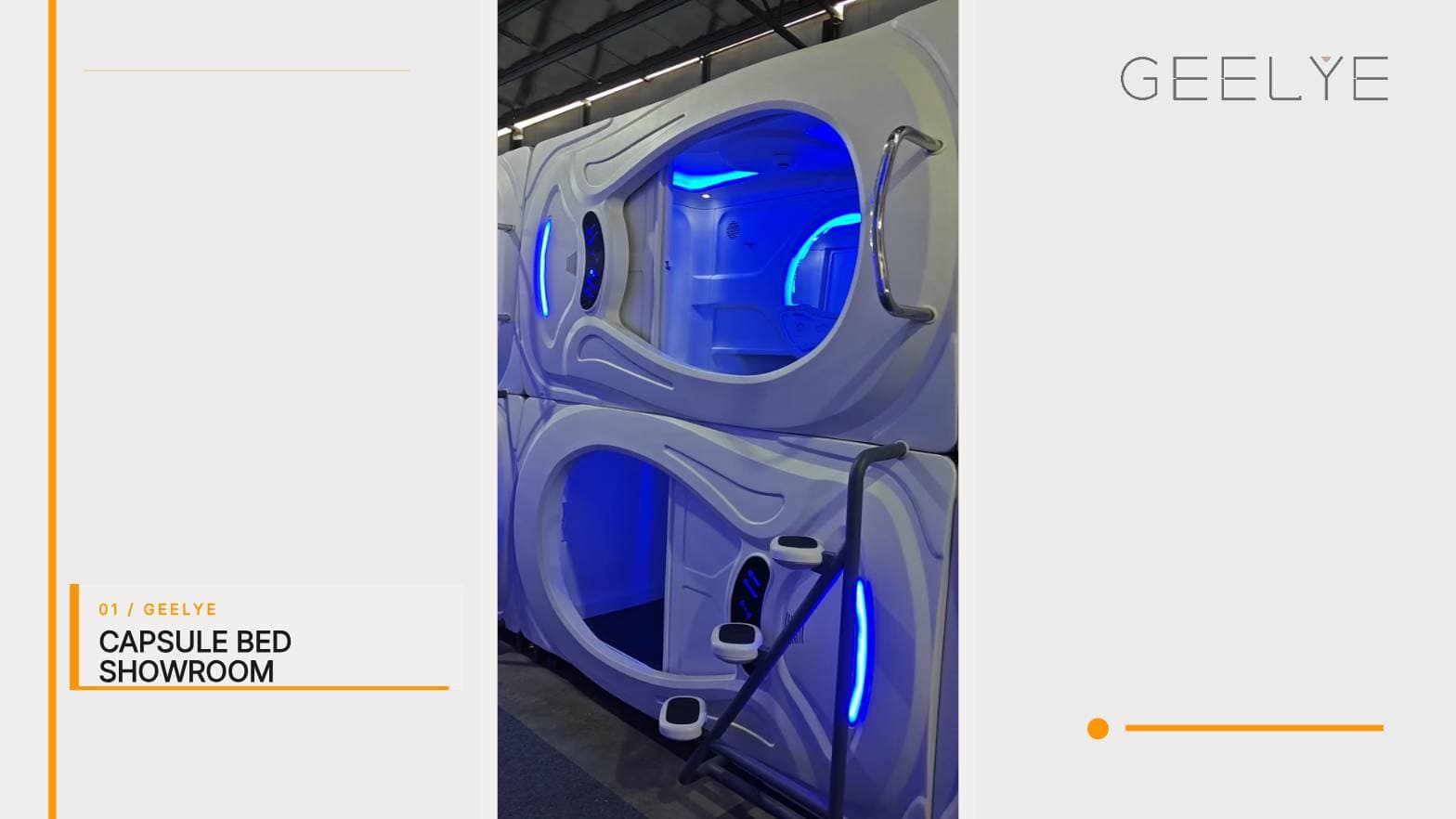
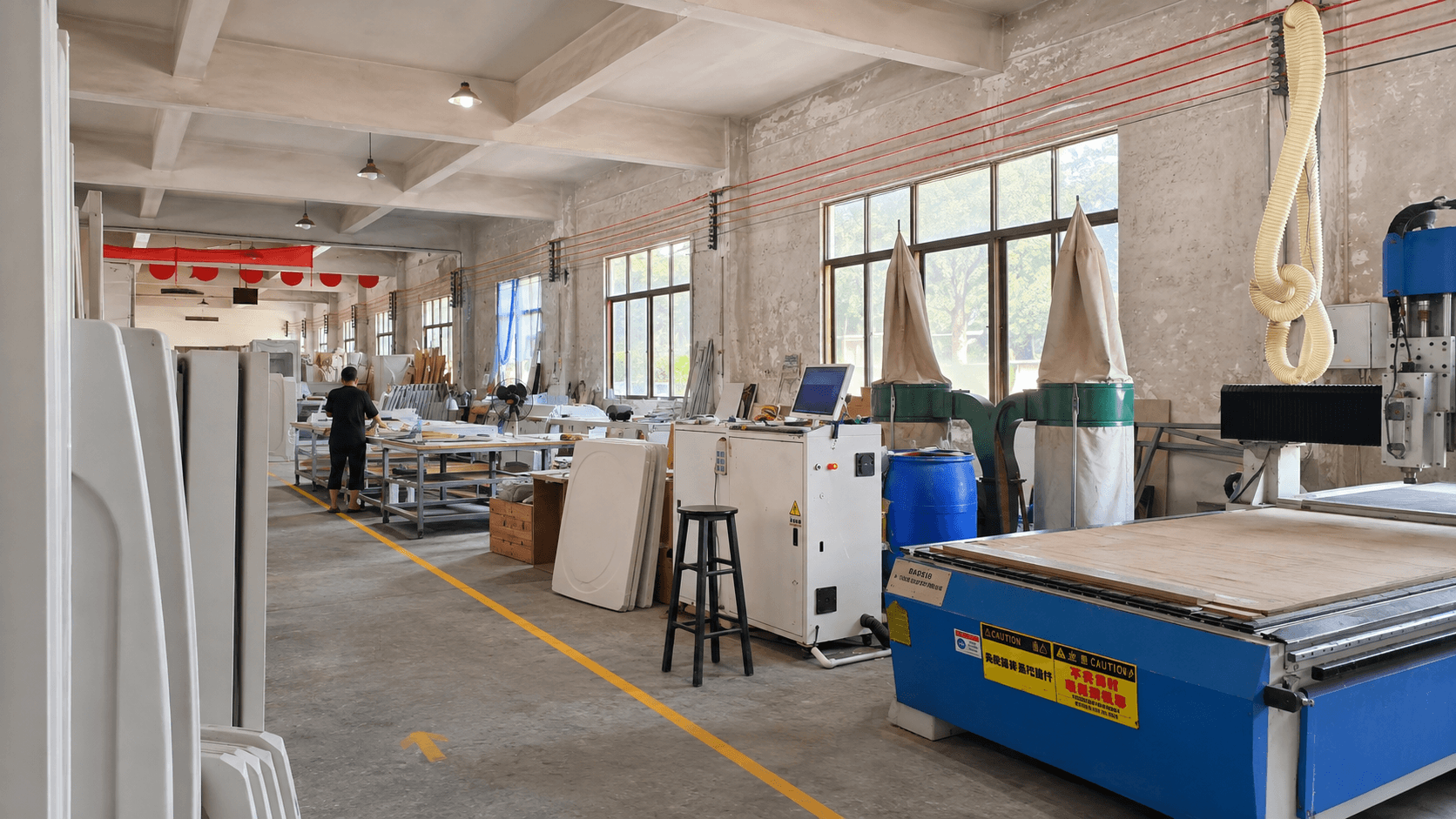
GEELYE’s Guangzhou manufacturing facility prepares capsule bed components, assembles the confirmed product configuration, checks specified functions and coordinates export packing. Buyers can review the workshop, production stages and configuration requirements before discussing an order.
Direct answer
Connect the factory review to your proposed order
Start with the product series, estimated quantity, destination and required configuration. These inputs help connect the factory review to the units you intend to purchase. Complete the review before production approval, recording the drawing revision, selected options, quantities and accepted deviations in the order documents. Confirm the current production schedule separately from the factory’s general capacity profile.
Factory tour
Inside GEELYE: factory, warehouse and showroom
See the capsule bed showroom, production workshop, warehouse organization and order preparation in one concise tour.
Production begins by connecting the fully confirmed model, quantity, project requirements and drawings with the required shell components, interior parts, electrical items, finishes and accessories. The workshop uses cutting, engraving, hole-opening and forming equipment according to the approved production scope.
Order, model, quantity and drawing confirmation
Cutting, engraving, hole-opening and forming preparation
Shell, interior, electrical item and accessory coordination
Material, finish and buyer-information confirmation
02
Stage 02
How are pod shells organized and assembled?
Prepared shell sections move through the workshop in batches. Checks cover whether the correct model and details are being produced, whether any hole is incorrect or omitted, whether machining details match the approved scope, and whether the order quantity and buyer information are correct.
Batch organization for project quantities
Matching of shell and interior components
Assembly against approved configuration
Hole position, omission and machining-detail checks
03
Stage 03
How are electrical functions integrated and checked?
Electrical configuration and accessories are reviewed as part of the selected product specification. Standard capsule input supports 110–240 V AC and is converted to 12 V low-voltage output inside the pod. Plug type, site connection, local rules and requested documentation must be confirmed for the destination; no frequency claim is made here.
Electrical configuration review
Lighting, ventilation and control checks where specified
Accessory and interface confirmation
Issue recording before packing
04
Stage 04
How are inspection, packing and export loading coordinated?
Products are packed in cartons sized for manual handling, but carton count, weight, dimensions and container quantity depend on the final model, configuration and order. The current facility can coordinate loading for approximately 2–3 40HQ containers per day when the confirmed packing plan, order readiness and container availability allow. FOB is the published trade term; the sales contract controls the final scope.
Order and quantity cross-check
Visible-condition and functional review
Packing identification and organization
40HQ loading and FOB document coordination
05
Stage 05
Which OEM, ODM and customization requests can be reviewed?
GEELYE can review contract manufacturing and customization for logos, control-panel language, and adding or removing agreed functions. A project requiring a newly developed mold starts from 100 single cabins; the buyer must provide customization requirements and design drawings. Functional changes that do not require a new mold can be reviewed when the buyer supplies the requirements and relevant accessories for technical confirmation.
Buyer submits requirements, drawings and any relevant accessories
Technical team confirms feasibility, interfaces and production details
New-mold projects start from 100 single cabins
Order composition and final scope are recorded in the confirmed contract
Responsibility matrix
What should buyers verify before approving production?
A useful factory review connects the supplier’s evidence to the proposed order. Workshop photographs show the production environment, while the model schedule, drawings and agreed inspection scope define what will be supplied. Record what has been reviewed and what still requires confirmation. Review destination-specific requirements with the buyer’s appointed local professionals.
Review area
Evidence to request
Decision to record
Product configuration
Selected model, options and configuration schedule
Which units and equipment are included?
Dimensions and access
Model-specific drawings and delivery-access information
Can the selected configuration reach and fit the site?
Materials and finishes
Material descriptions, finish references and applicable reports
Which exact materials and evidence apply to the order?
Functional checks
Agreed inspection items and acceptance criteria
What will be checked before packing?
Packing and shipment
Configuration-specific packing list and commercial scope
Who handles each stage from factory to site?
Evidence boundaries
Which manufacturing figures are currently published?
These figures describe the current documented factory profile. Availability and contractual commitments still depend on the confirmed order and current schedule.
Item
Published figure
Boundary
Facility
5,000㎡ manufacturing facility
Facility size does not by itself prove capacity for a specific order.
Monthly load
Approximately 1,500–2,000 sets
Planning reference; model mix, quantity and schedule must be reviewed.
Team
11–50 employees
Headcount is a facility profile, not a dedicated project-team commitment.
Container loading
Approximately 2–3 40HQ containers per day when ready
Depends on packing plan, order readiness and container availability.
New mold
Starts from 100 single cabins
Applies to a newly developed mold; feasibility and scope require technical review.
Production timing
Small orders generally 5–15 days; large-volume orders about 30 days; broader projects may be 30–45 days
Begins after complete confirmation and remains subject to quantity, season and the current schedule.
Production questions
Manufacturing capability FAQ
01
What is GEELYE's stated monthly production capacity?
The current monthly load capacity is approximately 1,500–2,000 sets. Capacity can be expanded when order demand requires, but availability and delivery dates must still be confirmed against model, quantity, customization scope and the current schedule.
02
Can the factory support customized sleep pod projects?
Yes. Logo, control-panel language and agreed functions can be reviewed. A newly developed mold starts from 100 single cabins. Functional customization without a new mold is reviewed after the buyer supplies requirements and any relevant accessories.
03
How long does production take?
Small orders generally require 5–15 days and large-volume orders about 30 days. A broader project schedule may be 30–45 days. Timing starts only after the order, configuration, requirements and final drawings are all confirmed, and remains subject to quantity, season and the current production schedule.
04
Does the stated capacity guarantee a delivery date?
No. Capacity is a planning reference, not a delivery guarantee. The confirmed sales contract and production schedule apply after the order, configuration, requirements and final drawings are approved.
05
What should a buyer approve before production starts?
Approve the model and SKU, quantity, configuration, drawings, materials and finishes, electrical interfaces, accessories, inspection requirements, packing basis, installation responsibility and commercial scope. Any destination-specific building or compliance approval remains with the buyer's local project team and relevant authority.
Buyer pathway
Move from supplier search to a procurement decision
Use each page for one decision: identify the manufacturer, compare product formats, verify factory capability, then evaluate procurement evidence.
Production planning
Discuss Your Production Requirements
Send your selected series, estimated quantity, destination, configuration requirements and target delivery window. Include drawings or a room plan where available so the production discussion can address your actual project.