
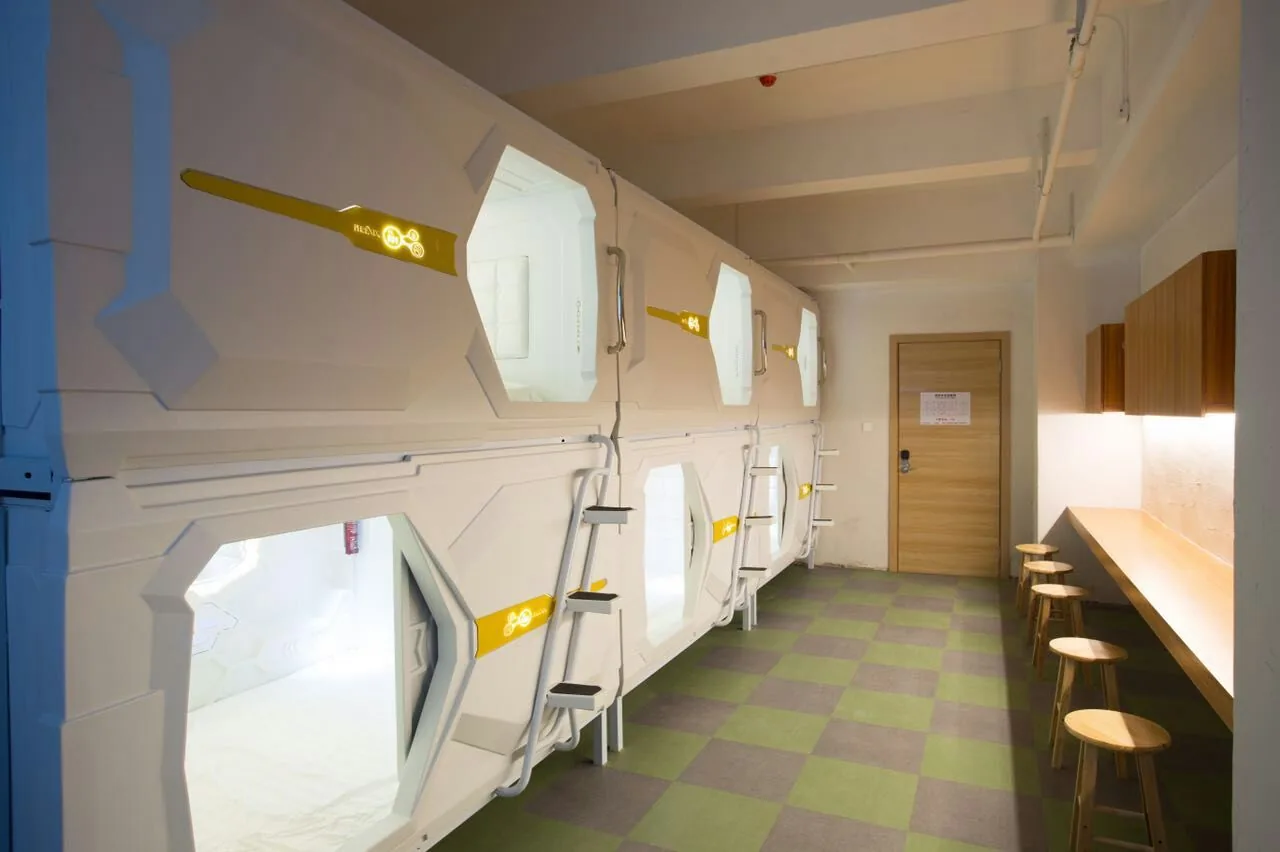
Start with two files and one shared project drawing
The first file describes the capsule product that will be supplied. The second describes the particular building and proposed use. They answer different questions. Product evidence can establish what a named model, material, component or assembly was designed and tested to do. A site submission asks whether the whole accommodation layout is permitted and safe at this address under the rules applied by the destination authority.
The shared reference is a controlled drawing set: room dimensions, pod model and revision, quantity, upper and lower positions, door operation, electrical and ventilation connections, circulation and exits. If the drawings change, the evidence comparison must be repeated. A brochure picture, generic model name or quotation without a revision identifier is too weak to join the two files.
Europe is not one approval jurisdiction. Identify the destination country first and check whether EU or EEA product rules apply there; a project outside that framework needs the product and building route required by its own jurisdiction.
| Question | Supplier product file | Local project file |
|---|---|---|
| What exactly is supplied? | Named model, options, materials, dimensions and revisions | Room schedule and approved installation positions |
| What does the evidence cover? | Report subject, tested sample, standard, result and validity for the ordered configuration | Requirements chosen for this occupancy and how submitted evidence is accepted |
| How does it work on site? | Installation, electrical and ventilation interface drawings and instructions | Escape, detection, compartmentation, power, air, accessibility and maintenance design |
| Who signs off? | Manufacturer or responsible economic operator for applicable product obligations | Qualified local designer, operator and competent authority under the local process |
Request a product document register, not a certificate bundle
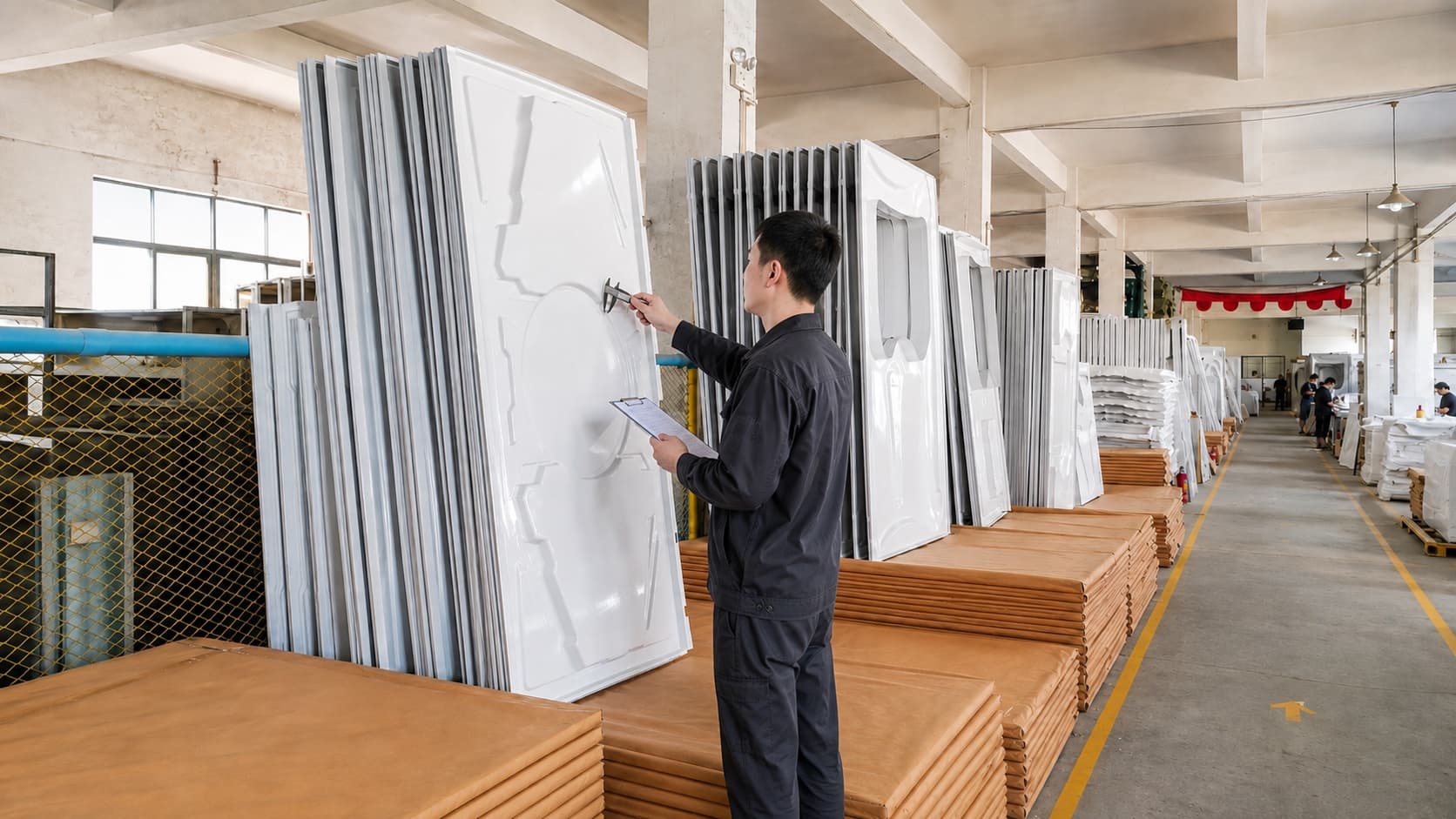
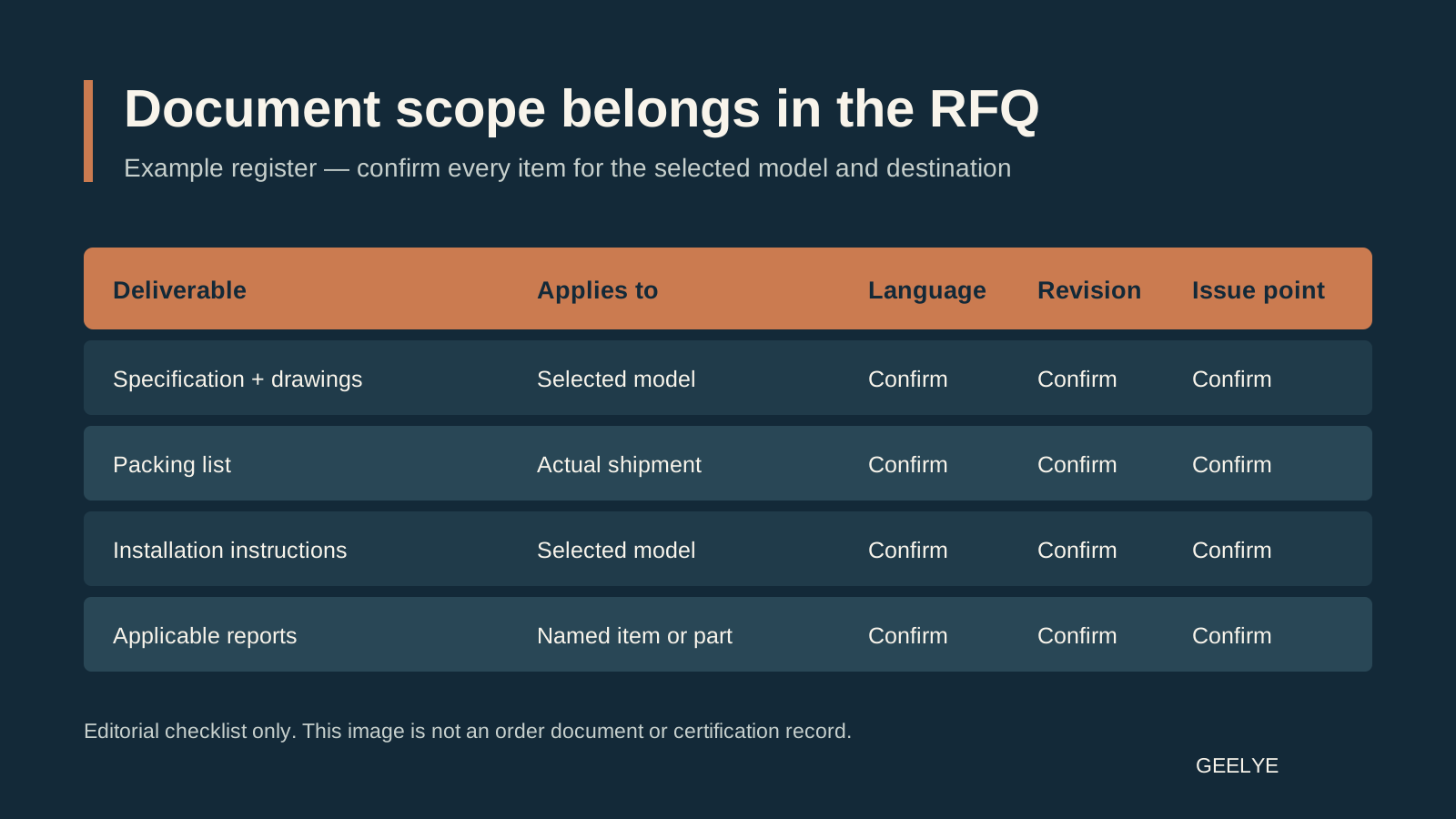
Begin with the exact model, intended use and options. Ask for a dimensioned product drawing and a material schedule identifying the visible shell, inner lining, floor or platform, mattress, door, seals and any site-added finish. Ask for the electrical supply and protection assumptions, connected load, controls, lighting and fan information where those features are included. Installation, cleaning and maintenance instructions should name the same model and revision. Some items may not exist at the first inquiry; mark them pending with an owner and delivery date instead of assuming they are included.
For every report or declaration, record the document title and number, issuer, date, test method or applicable legal instrument, tested specimen, model and material identity, configuration, result and limits. A report on a control board is evidence about that board. A panel reaction-to-fire result is evidence about the sampled panel or assembly described in the report. Neither automatically describes the finished capsule, its installation in a room or the approval of a hotel.
The European Commission says technical documentation for products covered by harmonised EU rules identifies the product, applicable rules, conformity assessment and supporting evidence. The buyer should use that structure to ask the supplier a direct question: which obligation applies to which part of this ordered system, and what document demonstrates it? Do not request a vaguely named 'European certificate' and assume the answer covers everything.
- Model, variant, revision and intended use
- Dimensioned drawings and material schedule
- Electrical and ventilation interfaces where fitted
- Report-to-component or report-to-assembly mapping
- Installation, operation and maintenance instructions
- Document language, issue date and promised delivery milestone
Check CE marking and test reports against their legal scope
A CE mark is not a generic European fire approval. EU guidance says CE marking is required only when harmonised EU legislation that covers the product specifically requires it. The correct question is therefore not 'Does the capsule have CE?' but 'Which EU rules apply to this product or its electrical functions, who is responsible for the finished product, and what does the supporting declaration identify?' A CE-marked part is not proof that a different assembled unit has been assessed as a whole.
The EU Declaration of Conformity, when required, should identify the product, manufacturer, applicable legislation and standards, and authorised signatory. The European Commission also notes that if a party places a finished product on the EU market under its name, component CE marks alone do not discharge that party's obligation for the finished product. Ask the supplier to explain the legal classification used for the ordered configuration, especially where power supply, controls or optional functions differ.
Construction product rules are a separate question. The current EU Construction Products Regulation creates a common framework for certain construction products, while EU countries set the rules for using them in buildings. Its obligations do not automatically apply to every product that might fit its broad definition; coverage depends on the relevant cited harmonised specification or European assessment document. Whether a capsule bed or a particular permanent assembly falls within a given route must be checked for the actual product and installation. Do not turn a supplier's panel report or a CE-marked electrical component into a claim of building compliance.
Map material fire evidence to the real capsule assembly
Material fire reports are useful only when the local reviewer can connect the tested specimen to what will be installed. Record the substrate, thickness, finish, adhesive, backing, joints and installation method shown in the report. A result for an isolated board may not describe a laminated panel, a composite shell, a mattress, a curtain or the final arrangement of several materials. Request the report and ask the local fire consultant whether its method and classification meet the requirement they identify for that use and location.
Avoid asking for one universal 'fireproof' certificate. A project may have different requirements for lining, furniture, bedding, concealed spaces or a permanently incorporated element. The applicable classification and evidence route can vary by country, building type and product role. The supplier should state what is actually tested; the local team should state what is required. If the two do not match, record a design question before procurement rather than assuming equivalence.
If a proposed finish, mattress, door detail or supplier component changes after approval, update the material schedule and recheck the evidence. A substitute that looks similar can change both the product file and the room submission. The same control is needed when a mock-up uses a different assembly from the production order.
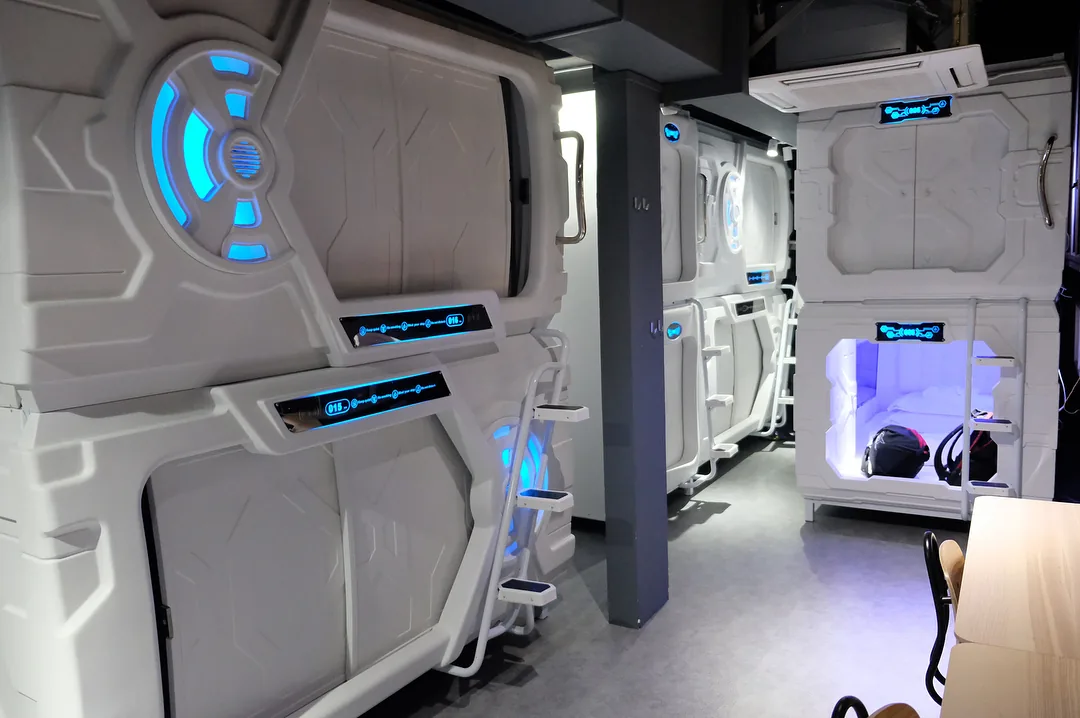
Give the local fire and design team a site file
The local reviewer needs a real address, current building use, proposed accommodation use, floor and room plans, operating capacity, guest profile and staffing model. They must establish the applicable national and local rules, the authority and the submission stage. A European label alone is not enough: even where EU product rules are harmonised, installation and building requirements are set at country and site level. The operator should identify who is legally responsible for approvals and for the fire risk or management duties after opening.
Ask the local team to assess occupancy, travel and escape routes, door operation, aisle width, upper-deck access, alarm and detection strategy, any required suppression, fire and smoke separation, emergency lighting and signage, electrical distribution, ventilation and maintenance access. This is a prompt for a qualified review, not a list of uniform European dimensions or equipment. Local requirements may add accessibility, hygiene, tourism accommodation or change-of-use steps that product files cannot settle.
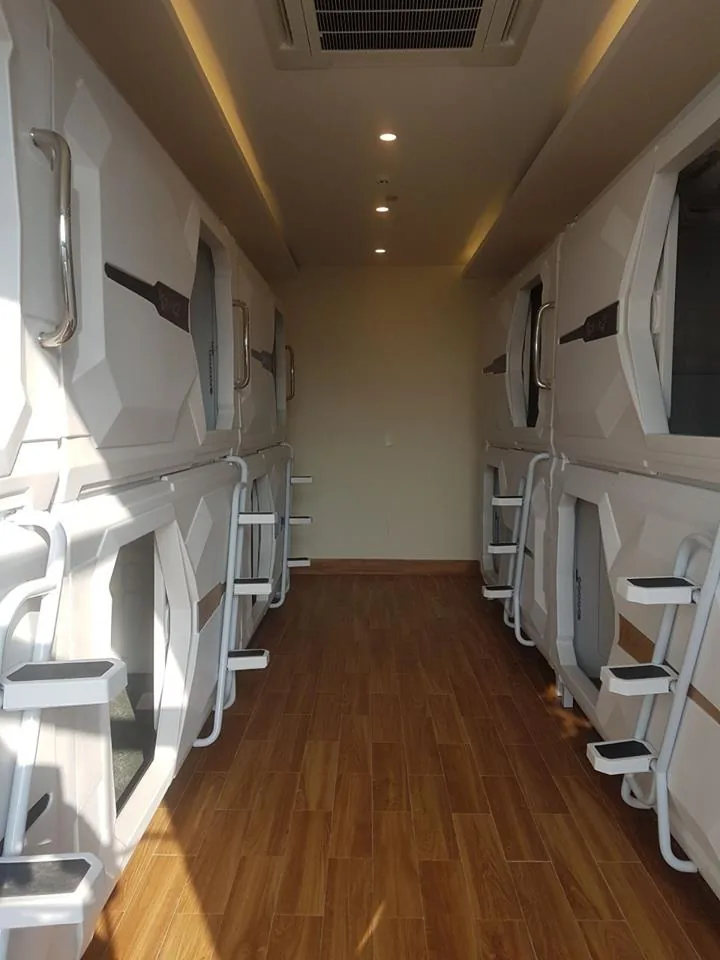
Existing-building conversions need particular care. A room that physically fits two rows of pods may lose circulation or obstruct an existing exit once ladders, doors, luggage and cleaning equipment are added. Show the operational state, including doors in use and any guest belongings, not only a clean architectural plan. Ask the fire designer to mark constraints directly on the layout before the supplier locks pod quantity.
Review the boundary where the product meets the room
Many unanswered fire questions sit at the interface. Can the capsule opening be used during a power loss? Will a guest hear and understand the site's alarm from inside the pod? Does the room's ventilation strategy still work when doors are closed? Where do cables run, who provides overcurrent protection, and who tests the installed circuit? Are maintenance panels, detectors and cleaning routes accessible after the final rows are installed? The supplier can describe its design and limits; the local designer must evaluate the complete building system.
Do not infer that a fan inside the pod supplies compliant room ventilation, or that a light or sensor in the capsule replaces the building's emergency or detection system. Ask for interface drawings and operating descriptions, then let the local electrical, mechanical and fire specialists state the design requirement. Their decision may change the model configuration, number of pods or installation method. Record those changes before accepting the production drawing.
At handover, separate three records: supplier product inspection, installed-unit functional checks and the site authority's approval or occupancy process. One cannot substitute for the others. The operator also needs a maintenance and incident procedure that preserves the conditions accepted in the site design.
Use an RFQ matrix to close gaps before ordering
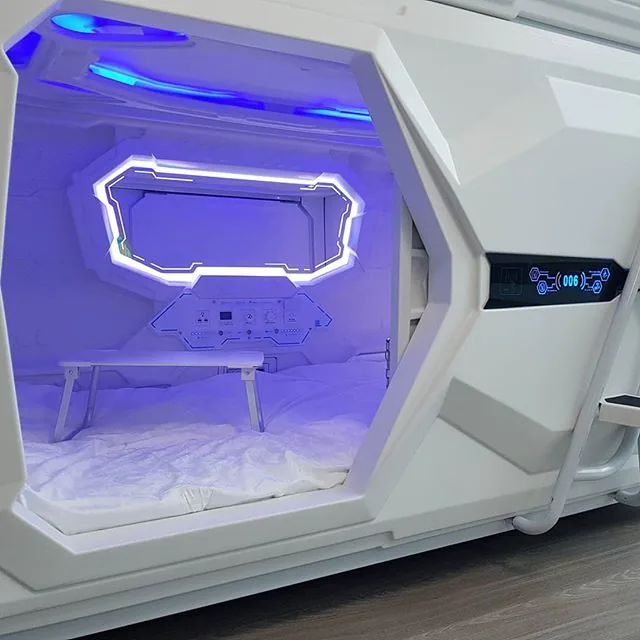
Send one matrix to every shortlisted supplier and share the same version with the local design team. For each requirement, enter the owner, applicable model or site drawing, requested evidence, current status and decision date. Use plain status labels: provided and checked, requested, requires local decision, or not applicable with a reason. A blank cell is an unresolved question, not proof of compliance.
Before purchase, ask the supplier to return a document register tied to the offered configuration, and ask the local consultant for a written list of site constraints that affect selection. Then reconcile both against one drawing revision. Do not freeze the pod count, finish or installation boundary while a critical fire or approval issue is still open. The order should identify which documents are due before manufacture, before shipment and before site acceptance.
A useful first inquiry supplies the country and city, property type, new build or conversion, floor plan, proposed use, capacity target, model shortlist and known authority feedback. It asks the supplier what evidence exists now, what is configuration-dependent and what cannot be promised. It asks the local team which rules and submission route apply. This keeps the quote process useful without pretending a supplier can approve a building remotely.
- Destination country, city and property address
- Current and proposed building use
- Dimensioned plan, capacity and door/aisle concept
- Named model, options, finishes and revision
- Required product evidence with exact scope
- Local fire and building reviewer, authority and submission stage
- Open item, owner and decision deadline
Buy the documented product for an approvable site plan
A careful buyer does not ask one party for a blanket 'European fire certificate.' They obtain precise evidence for the selected product, a local review of the actual accommodation site and a revision-controlled drawing that lets those two teams compare the same installation. When a document does not cover the ordered model or a site rule is unresolved, keep the item open and assign an owner before committing to production.
Prepare the product side of your European project review
Send GEELYE the destination, proposed use, floor plan, model shortlist and the document questions raised by your local designer. We can identify available product information and clarify which configuration details still need confirmation.
Frequently asked questions
Does a CE mark approve a capsule hotel in Europe?
No. A CE mark applies only under relevant EU product rules and to the product scope identified by its evidence. Building use, room layout and fire approval are checked under the rules and process applicable to the particular site.
Can a component fire report cover a complete capsule bed?
Not automatically. Check the report's specimen, material, assembly, test method, result and limits against the ordered model. A local qualified reviewer must decide whether the evidence satisfies the site's identified requirement.
Who confirms escape routes and occupancy for a capsule hostel?
The local project and fire design team should establish the applicable rules and submit the specific layout to the competent authority as required. A pod supplier can provide dimensions and interface information, not the property's approval.
Which documents should I request before a European capsule bed RFQ?
Request a model and revision schedule, dimensioned drawings, material and electrical information, available test reports with their exact scope, installation instructions and a document register. Ask the local team separately for site requirements and the approval route.
What if the finish or pod layout changes after review?
Update the drawings and material schedule, remap relevant product evidence and ask the local reviewer to assess the changed site design. Do not assume a prior test or approval covers a new configuration.