
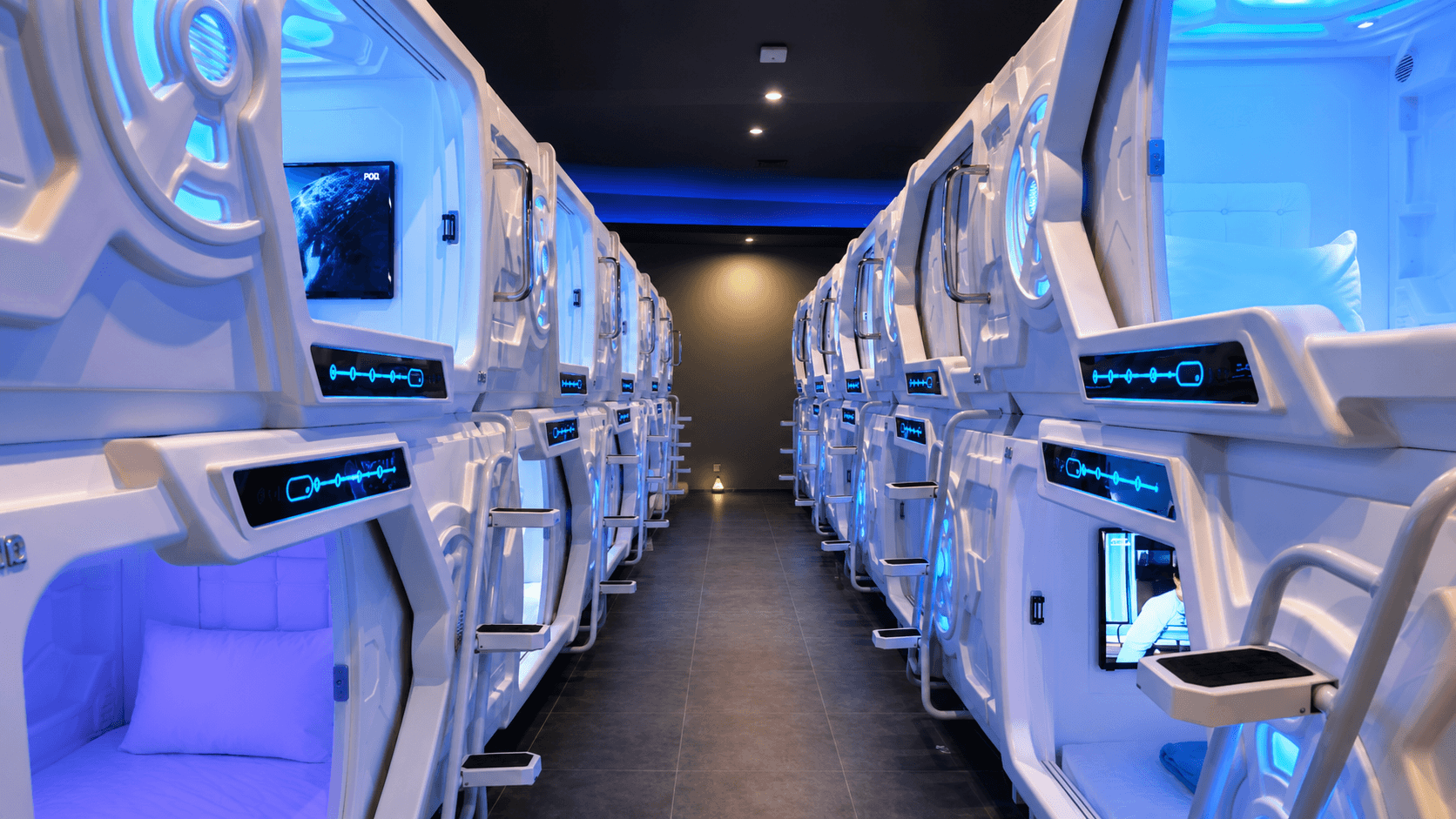
How much does a capsule hotel cost?
There is no universal global price per pod or per room. A reliable budget depends on the selected pod format and quantity, room fit-out, MEP services, local approvals, logistics, installation and operating preparation. Treat an early unit price as one input, then build a package budget from a dimensioned plan and a normalized scope.
What should a capsule hotel budget include?
Separate the sleep pods, interior fit-out, MEP services, regulatory and life-safety work, logistics, installation, and operating preparation. The matrix also distinguishes buyer inputs from items that must be confirmed by local professionals before capacity or approval is treated as final.
| Decision area | Budget-planning basis |
|---|---|
| Suitable projects | Capsule hotels, hostels and commercial accommodation with a defined operator, dimensioned plan, cleaning workflow and coordinated utilities. |
| Not suitable as a default | Rooms without confirmed evacuation, ventilation, power, accessibility or approvals; or requests based only on the maximum number of shells. |
| Buyer provides | Destination, building type, users, quantity, dimensioned room and height, delivery access, functions, finishes, schedule and pricing basis. |
| Local consultant confirms | Building and fire requirements, evacuation, accessibility, structure, room HVAC, electrical distribution, sanitation, permits and allowed capacity. |
| Products and references | Compare GY80, GY82, GY98, single series and Wooden Modular. Treat Riccarton Malaysia and Jakarta Airport as environment references, not proof of an undocumented installed model. |
How should buyers compare capsule hotel quotations?
Normalize the model, quantity, configuration, accessories, Incoterm and named place, documentation, packing, installation, exclusions and validity period. Compare commercial risk as well as the total: drawing quality, change control, inspection access, packing method, warranty process and replaceable components all affect whether a lower initial price remains lower after delivery.
What must be confirmed before a budget becomes an order?
Production should begin only after the model, quantity, layout, dimensions, opening direction, finishes, electrical configuration, accessories, labels, packing basis, delivery boundary, installation responsibility and approval drawing are frozen in writing. Published facts are useful for planning; contractual values come from the current quotation and order-specific documents.
| Verifiable item | Currently published evidence | Order and approval boundary |
|---|---|---|
| Models | GEELYE lists GY86, GY81, GY80, GY88, GY00, GY10, GY20, GY30, GY82, GY98 and Wooden Modular series. | Name the exact series, SKU, quantity and configuration in the quotation. |
| Dimensions | Published approximate examples include GY80 at 2300 × 1148 × 1760 mm and a GY98 double-deck set with ladder at 2194 × 1675 × 2475 mm. | Use the current model drawing for room planning, access, tolerances and clearances. |
| Materials | Relevant ranges use an ABS outer shell with a metal frame; Wooden Modular uses engineered wood panels with a metal frame. | Material grade, finish and fire evidence must match the supplied configuration; component evidence is not whole-pod certification. |
| Electrical | Current profiles state 110–240 V AC input and a 12 V low-voltage cabin system. | Confirm frequency, plug or fixed connection, final load, cable exit, protection and site connection points. |
| Layout | GY80, GY82 and GY98 are documented in horizontal format; selected single series and Wooden Modular support horizontal or vertical planning. | Freeze orientation, tiering, ladder or door projections, maintenance access and approved capacity. |
| Installation boundary | The current supply profile assigns installation to the customer and provides video plus written instructions. | Quote site supervision, remote support or a local installer separately; local contractors own services, safety and approvals. |
| Document sources | Product master updated 10 August 2026, the 2024 catalogue and the 2024 standard specification record. | Final contractual values come from the current quotation, approved drawing, document register and order-specific inspection. |
Why a per-pod price is not a project budget
Online capsule bed prices are usually product-level references. They may exclude mattresses, ladders, lockers, televisions, destination plugs, spare parts, export packing, freight, taxes and installation. They also say nothing about whether the proposed model fits the room, whether the building can support the electrical load, or whether local authorities will accept the overall accommodation layout. A low unit price can therefore coexist with a high total installed cost.
For a credible comparison, define the commercial boundary of each quotation. Ask whether the price is ex-works, FOB, CIF or delivered to site; identify included accessories; and separate mandatory items from options. Then place the supplier quotation inside a full project cost plan. This approach is more useful than asking three factories for a number before sharing the destination, quantity, room dimensions and target opening date.
- Product scope: pod shell, frame, controls, ventilation components and standard accessories
- Project scope: layout work, customization, samples, documentation and coordination
- Logistics scope: packing, inland transport, ocean or air freight, insurance, duty and local handling
- Site scope: fit-out, electrical distribution, ventilation connection, fire systems and installation
- Operating scope: bedding, lockers, cleaning equipment, software, staff training and launch inventory
The seven cost packages in a capsule hotel budget
A useful feasibility model divides the investment into packages that can be owned by different suppliers or consultants. Keeping these packages visible prevents gaps between the pod factory, architect, main contractor and operator. It also makes value engineering more disciplined: the team can reduce a finish specification or optional screen without accidentally removing a required safety or infrastructure item.
Percentages are intentionally not prescribed here. A conversion inside an existing hostel, a new airport concession and a purpose-built capsule hotel will have very different cost distributions. The better method is to obtain market quotes for each package after a preliminary layout has established capacity and the operating concept.
1. Sleep pods and guest-unit equipment
This package includes the selected capsule models, structural frames, internal lighting, ventilation components, control panels, power outlets and confirmed accessories. Wider premium units, double-guest pods, televisions, electronic locks, branded finishes and project-specific moulded parts can increase both manufacturing and packing requirements. Confirm what is standard before assuming that a photo represents the quoted configuration.
2. Building, interiors and shared facilities
The sleeping room is only part of the guest journey. Budget for reception, luggage storage, circulation, washrooms, showers, accessible facilities, staff areas, signage, acoustic treatment, flooring, wall and ceiling finishes, and any food or lounge space. Existing-building surveys may reveal waterproofing, structural or services upgrades that are unrelated to the pod price but essential to opening.
3. MEP and life-safety works
Electrical distribution, ventilation or air-conditioning, detection, alarms, sprinklers, emergency lighting and escape provisions must be designed for the destination and building. The pod supplier can provide product information, but the local architect, engineer and authority determine the compliant building solution. Treat this work as a core budget package rather than a late contingency.
4. Freight, import and local delivery
International logistics depend on packing volume, container utilization, route, season, port charges, customs classification and final-site access. Ask for packing dimensions and gross weights after configuration is frozen. Include customs brokerage, duties or taxes, demurrage risk, unloading equipment, temporary storage and movement from the truck to the installation floor.
5. Installation and commissioning
Installation may be carried out by the manufacturer’s team, a trained local contractor or a combined team. Budget travel and accommodation where applicable, local labour, tools, lifting, waste removal, testing and snag correction. Commissioning should confirm physical stability, doors and access panels, electrical functions, airflow, controls, finishes and room-by-room records.
6. Pre-opening and operational systems
A hotel also needs mattresses and linen where not included, cleaning kits, replacement consumables, locks or access cards, booking and payment systems, operating procedures, photography, staff training and opening inventory. Airport concepts may add point-of-sale or flight-information integration. These costs are easy to overlook because they sit outside the factory quotation.
7. Professional fees and contingency
Allow for design, engineering, approvals, project management, inspections and a risk contingency appropriate to the building stage. A project based on an unverified existing plan needs more uncertainty allowance than a coordinated construction package. Contingency is not a substitute for scope definition; it protects the project from issues that remain after reasonable investigation.
Need a project-level budget, not a catalogue price?
Send your room plan, destination, target bed count and preferred opening date. GEELYE will help identify suitable product formats and the information required for a coordinated quotation.
Send Your RequirementsThe main variables that change sleep pod cost
The same quantity can produce different quotations because configuration changes affect materials, labour, electronics, packing and engineering. Buyers should compare a written specification rather than visual similarity. At GEELYE, for example, the GY861-A classic model and GY982-A premium model serve different room and guest-experience objectives; their dimensions and configurations should be evaluated against the layout before price becomes the deciding factor.
The largest avoidable cost is often late change. Changing colour is usually easier than changing dimensions, electrical architecture or access arrangements after production starts. Freeze critical requirements through approved drawings, samples or finish references, and a signed configuration schedule.
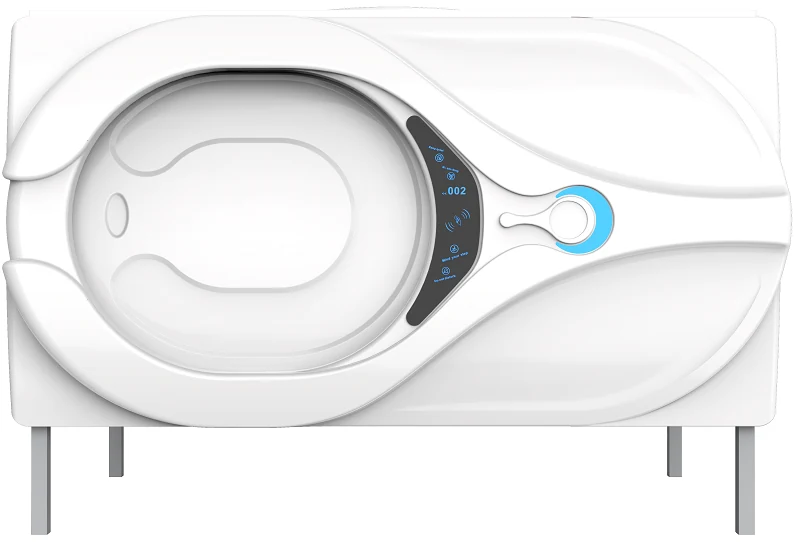
- Pod type and usable internal space: classic single, premium single, double-guest or wooden format
- Single-level versus double-deck layout, including ladders and maintenance access
- Material and finish specification, including any project-required flame-performance option
- Electrical input, sockets, lighting, control functions, screens and electronic locks
- Colour, branding, custom panels and the number of low-volume variants
- Quantity, production batching, spare-parts package and inspection requirements
- Export packing method, container utilization and destination logistics
How to estimate capacity before requesting prices
Start with a scaled plan, not gross floor area divided by a pod footprint. Mark fixed walls, columns, doors, windows, risers, washrooms and ceiling constraints. Then protect exits, circulation, cleaning routes, luggage movement, accessible paths and maintenance zones. Only the remaining usable sleep-room area should be tested with actual model dimensions. A two-tier layout may increase capacity, but it also affects ceiling clearance, ladder space, guest preference, cleaning and fire strategy.
Create at least two layout scenarios: a capacity-led option and a comfort-led option. Compare bed count, room feel, shared facilities and likely achievable rate. This prevents the common error of maximizing theoretical beds before validating operations. A manufacturer can help place selected units, but final architectural and regulatory coordination should remain with competent destination professionals.
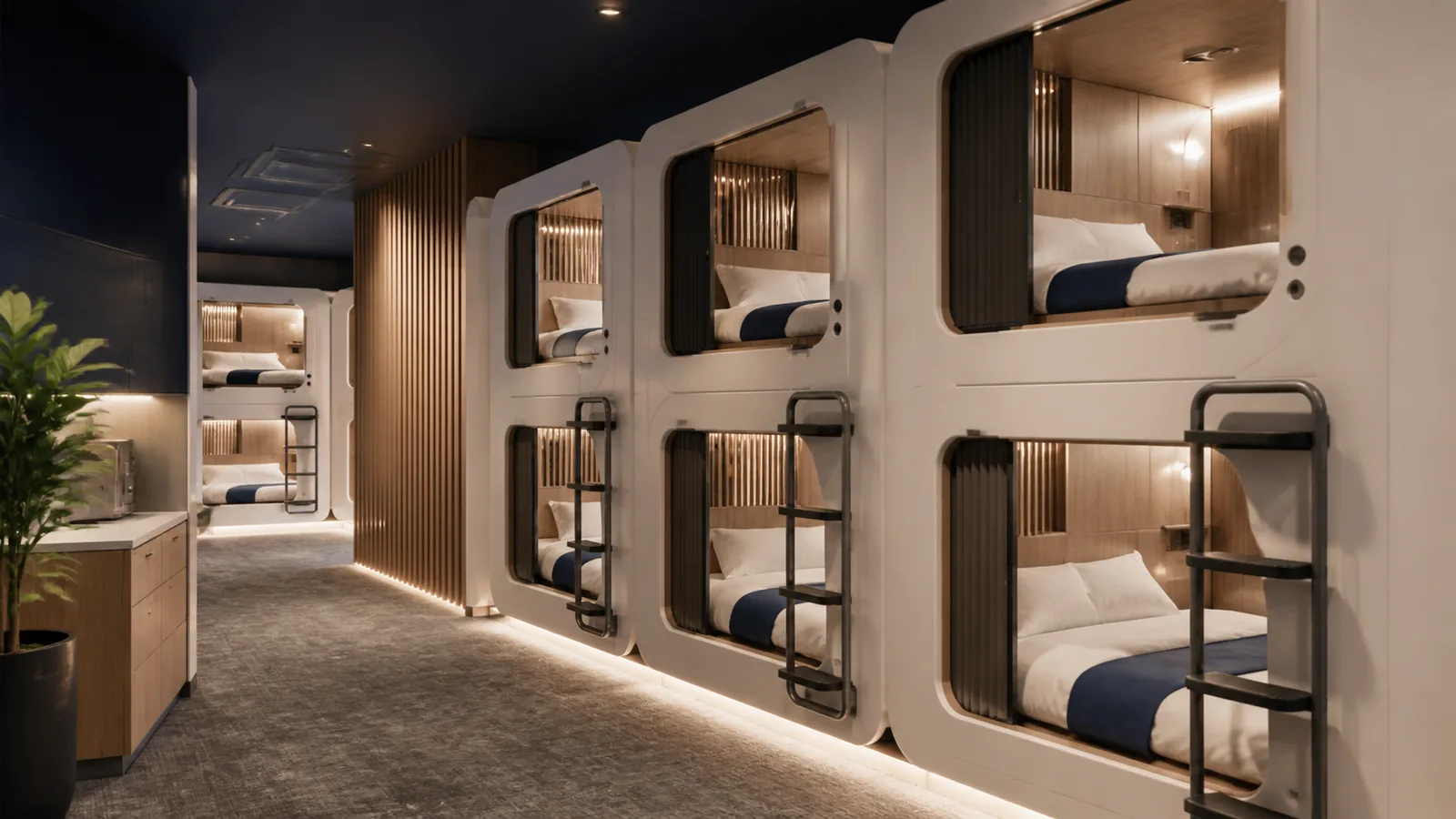
Information to send with an early inquiry
Provide the country and city, building type, dimensioned floor plan, ceiling height, target capacity, preferred pod category, expected opening date and any known code constraints. State whether the project is a new build or conversion and whether local installation labour is available. If information is preliminary, label it clearly so the quotation is treated as a budget rather than a fixed offer.
Why fewer well-planned pods can perform better
More beds do not automatically create more revenue. Congested corridors, insufficient lockers, slow cleaning and poor acoustic separation can reduce reviews and repeat demand. Evaluate revenue per usable square metre together with guest satisfaction, turnover time and staffing. The commercially strongest plan is the one the operation can reliably sell and service.
Budgeting freight, inspection and shipment risk
Freight should be estimated using a packing list for the confirmed configuration. Product dimensions alone are not enough because disassembled parts, protective materials, accessory cartons and loading method determine shipment volume. Ask who is responsible for export documents, origin transport, insurance, destination customs and final delivery. Confirm whether the site can receive a full container or requires a warehouse transfer and smaller vehicles.
Before shipment, use a documented inspection plan. Checks can include quantity, model and colour verification, visible finish review, lighting and control operation, ventilation fan operation, socket or plug configuration, accessory count, labels, packing protection and carton or crate marks. Photos and test records provide a useful handover trail, but they do not replace any destination inspection or certification obligation.
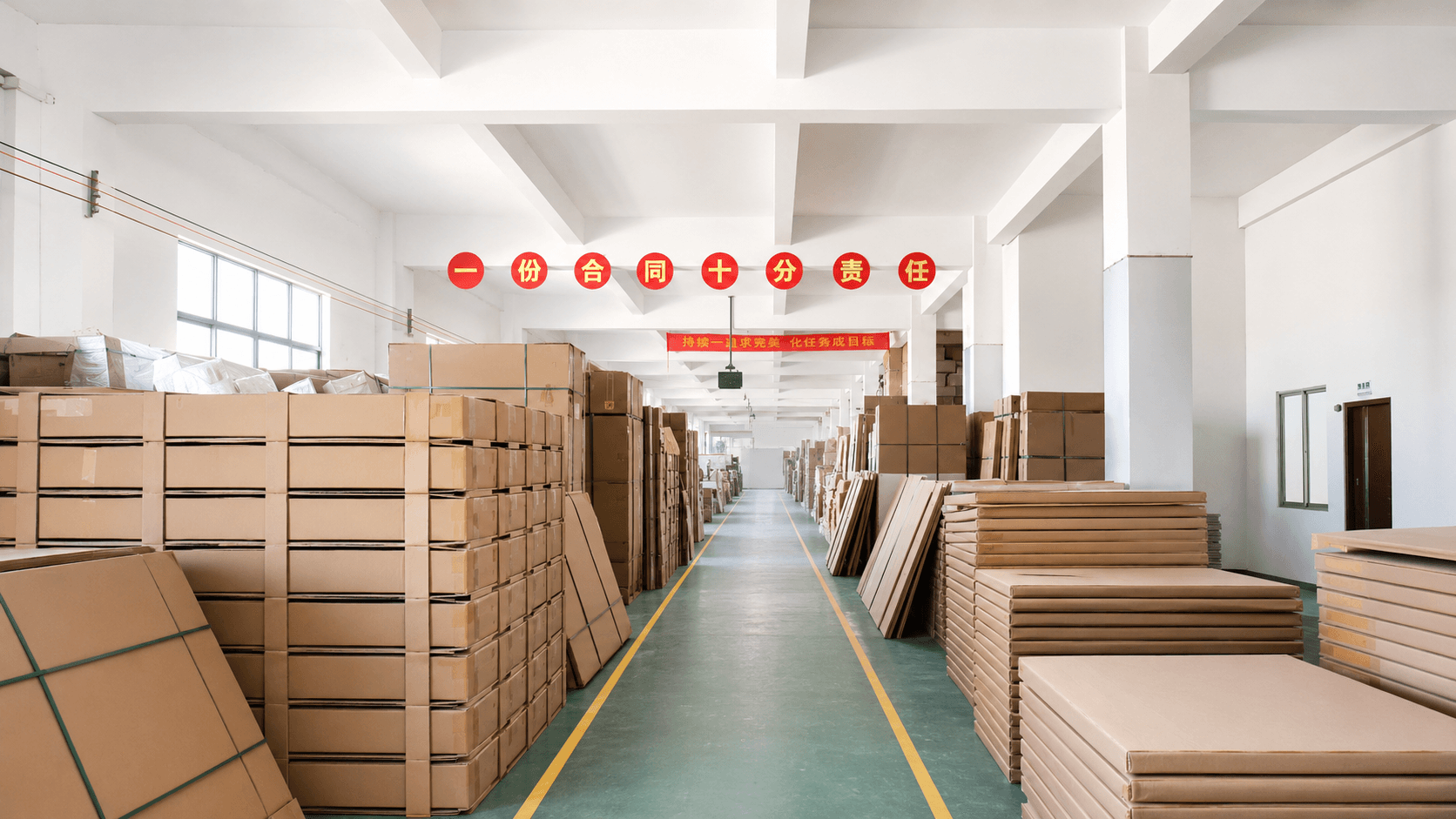
- Agree the Incoterm and named place in the commercial offer
- Verify packing list, dimensions, gross weight and number of packages
- Match marks and accessory cartons to rooms or installation batches
- Protect a realistic customs and port-clearance allowance in the schedule
- Arrange dry, secure storage if installation will not start immediately
A practical quotation-comparison method
Convert every offer into the same comparison table. Put base unit, included functions, optional items, spare parts, documentation, packing, freight and installation on separate lines. Note exclusions and validity dates. Add a compliance column that records whether evidence applies to the exact component or model being considered. A certificate logo on a brochure is not enough; buyers should review the document scope and destination relevance.
Then compare commercial risk, not only total. Consider drawing quality, response time, change-control discipline, production visibility, inspection access, packing method, warranty process and the availability of replaceable components. The lowest initial offer may remain the right choice, but it should win after normalization rather than because other costs were hidden.
Use three price levels
Maintain a budget estimate during feasibility, a coordinated quotation after layout and configuration review, and a final order value after drawings, finishes, logistics terms and responsibilities are approved. Each level has a different accuracy. Mark assumptions and expiry dates so the team does not treat an early indication as a guaranteed delivered price months later.
Calculate life-cycle implications
Ask how lamps, fans, controls, sockets, locks and frequently touched parts are accessed and replaced. Record cleaning materials, mattress size and consumable needs. A feature that adds purchase cost can be worthwhile when it reduces reset time; another feature may add failure points without improving the operating model. Make these decisions with operations staff, not procurement alone.
Cost mistakes to prevent before the order
The first mistake is buying units before local feasibility is confirmed. The second is using catalogue dimensions without tolerances, access and services. The third is assuming that the supplier owns building compliance. The fourth is overlooking import and last-mile handling. The fifth is postponing installation planning until the container arrives. Each can create rework that is more expensive than early coordination.
A disciplined project gate reduces these risks. Do not release production until the model, quantity, layout orientation, finish, electrical standard, accessories, labels, drawings, payment milestones and shipment responsibilities are approved. If the schedule requires early manufacturing, keep a written risk register identifying what remains unresolved and who accepts the consequences.
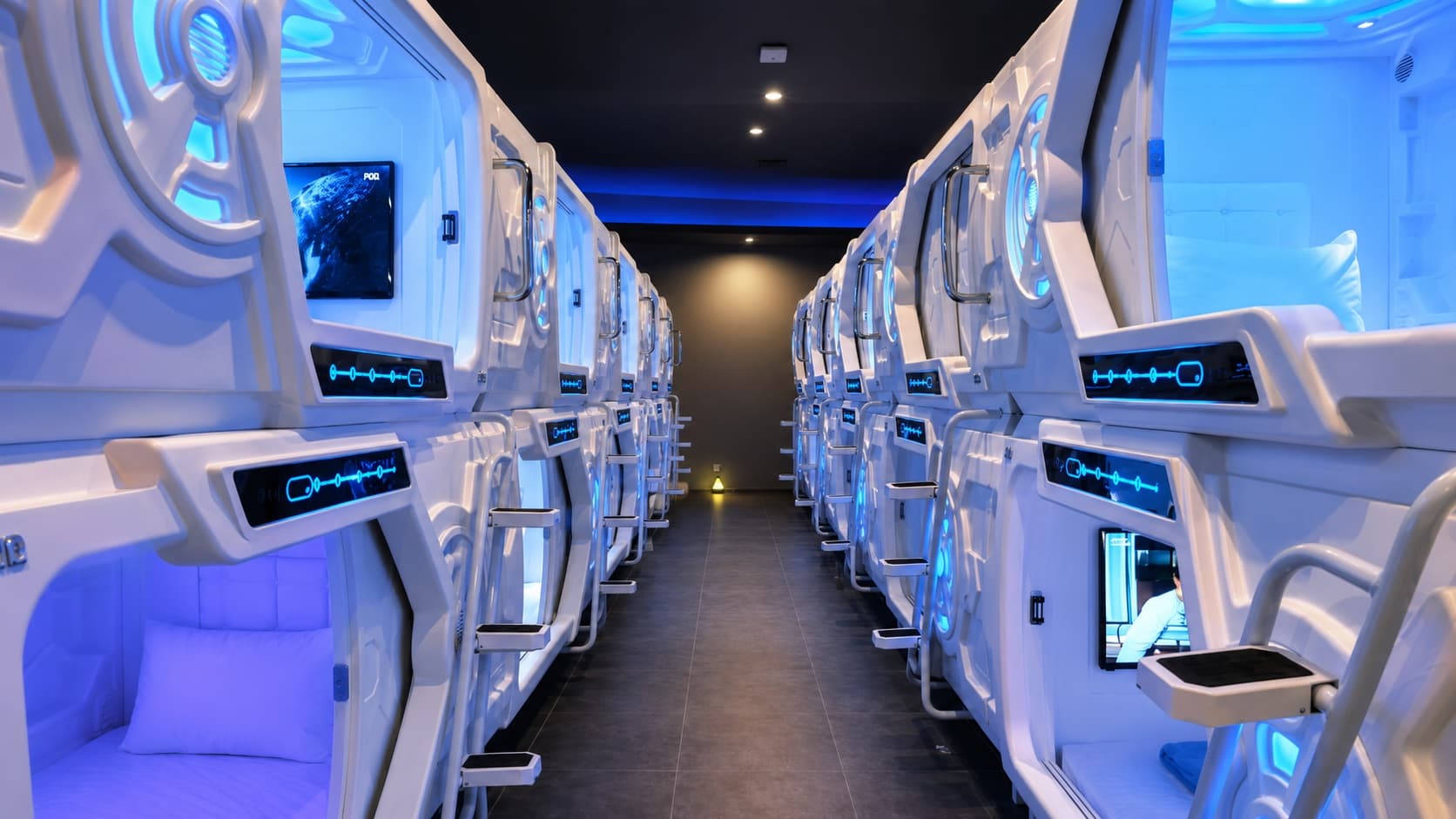
- Do not budget from a marketplace thumbnail or unqualified unit price
- Do not count beds before protecting circulation and authority requirements
- Do not assume certificates cover every configuration or destination
- Do not book freight before packing data and production timing are credible
- Do not leave unloading, storage and local installation ownership undefined
A decision-ready brief for accurate budgeting
The fastest route to a useful budget is a concise project brief. Include the business model, target guest, site status, room plan, capacity range, product preference, required functions, destination electrical information, desired delivery window and procurement term. Add photographs or a walkthrough for existing spaces. Identify the architect, operator and person authorized to approve changes.
GEELYE can use this information to recommend relevant product families and prepare a more focused discussion. The output should still be coordinated with your local design and compliance team. A transparent brief does not lock the buyer into one supplier; it creates comparable proposals and exposes missing scope before it becomes a site problem.
Budget the operating project, not just the pod
A realistic capsule hotel cost plan begins with the operating concept and a coordinated room layout. It separates products, fit-out, services, safety, logistics, installation and opening costs; records assumptions; and becomes more accurate as the project passes design gates. This method gives investors a better feasibility decision and gives suppliers the information needed to quote responsibly.
If your room plan and target capacity are available, the next useful step is not another generic price search. Send the project facts, request a model recommendation and compare a clearly defined scope.
Sources and further reading
Related GEELYE resources
Prepare your capsule hotel quotation
Share the application, quantity, drawings and required functions to begin a practical product and delivery discussion.
Frequently asked questions
What is included in a capsule hotel pod price?
Inclusions vary. A quotation may cover the shell, frame, lighting, ventilation components and basic controls, while mattresses, ladders, lockers, screens, locks, spare parts, export packing, freight and installation may be separate. Request an itemized scope and exclusions list before comparing prices.
How many capsule beds fit in a room?
Capacity depends on the selected model dimensions, single or double-deck arrangement, room geometry, ceiling height, circulation, exits, luggage, cleaning access, accessibility and local requirements. Use a scaled layout with actual product dimensions; do not estimate from floor area alone.
Are double-deck capsules always more economical?
They can increase beds per room, but require suitable height, ladder space, operational acceptance and a compliant fire and evacuation strategy. Some markets or guest segments may prefer single-level units. Compare revenue potential with cleaning, comfort and approval implications.
Does the sleep pod manufacturer handle hotel permits?
Normally, local licensing and building approvals remain with the developer and locally appointed professionals. A manufacturer can provide product drawings and component information for coordination, but should not claim universal approval because regulations vary by country, city, building and use.
When can a supplier provide a firm quotation?
A firmer quotation is possible after quantity, model, configuration, finishes, accessories, electrical requirements, delivery term and project schedule are confirmed. Freight remains time-sensitive and may require a separate validity period. Site works usually need quotes from local contractors.
What documents should be checked before payment or shipment?
Review the approved quotation, product schedule, drawings, finish references, payment terms, inspection plan, packing list, commercial invoice and required shipping documents. Where compliance reports are relevant, verify the named product or component, test scope, issuing body and destination requirement.