
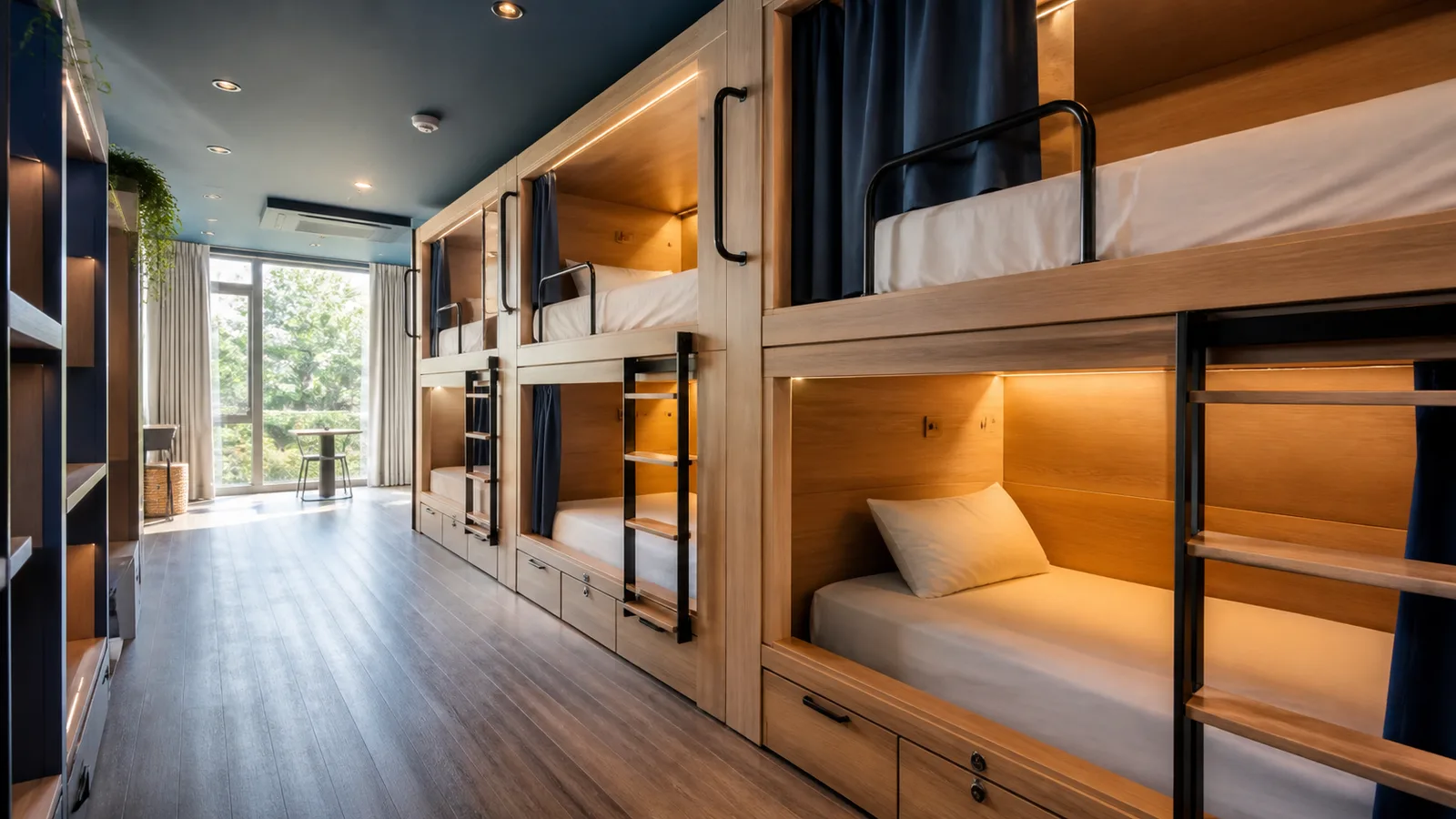
Safety and privacy are operational responsibilities, not a promise
A women-only dorm can be a valuable choice for some guests, but it is one option within a wider operating model—not a statement that it is automatically safe or that other dorms are unsafe. The same is true of capsule beds, curtains, locks, cameras or electronic access. A feature can support privacy or control access; it cannot by itself prevent harassment or replace staff judgment.
Start with a realistic goal: reduce predictable vulnerability, make assistance available, and respond consistently when a concern is raised. Review the guest journey from booking to night-time arrival, sleeping, showering, locker use, departure and reporting. Each handoff is a point where unclear information, poor visibility or an unavailable staff member can leave a guest unsupported.
- Set a written guest-safety and privacy standard for every dorm type
- Review the night journey, not only daytime reception
- Assign owners for access, lighting, room moves and incident escalation
- Review local safeguarding, accommodation and privacy requirements with qualified local advisers
Offer clear dorm choices and use allocation rules with care
List women-only, mixed and private room options accurately when they exist. Do not label a room as women-only unless access, inventory controls and exceptions can actually support that description. At check-in, staff should be able to explain the booked room type and resolve an unexpected mismatch discreetly rather than debating it at a public desk.
Mixed dorm allocation deserves an explicit rule. A booking system may fill beds efficiently while producing an avoidable pattern such as several men and one woman in a small dorm. There is no universal ratio that makes a room safe, but managers can flag this pattern for a discreet review, offer a feasible alternative where available, and record the decision. The purpose is not to police guests or assume misconduct; it is to avoid treating a foreseeable comfort and risk concern as invisible.
| Decision | Operational question | Example control |
|---|---|---|
| Women-only inventory | Can the room type be kept true through late arrivals and room moves? | Restrict access and document authorised exceptions |
| Mixed-dorm placement | Does the allocation create an isolated guest pattern? | Flag for a private staff review, not an automated judgment |
| Room change | Who can approve and carry out a move overnight? | Name an on-call role and record availability |
| Capacity pressure | What happens when the preferred room type is sold out? | Give truthful options before payment or arrival |
Design the sleep area for practical privacy and access
Privacy curtains or closable entrances, individual lockable storage, controlled room access, clear wayfinding and reliable lighting address different needs. A curtain can reduce visual exposure; a locker can protect belongings; access control can limit unauthorised entry; lighting and sightlines can help guests locate help. Plan them as a package, including cleaning, maintenance, emergency instructions and a way for staff to reach a guest when needed.
Inspect the real room at night. Check entrances, corridors, stairwells, washroom routes, locker areas and the route between reception and each dorm. Replace failed lights promptly and avoid layouts where a guest must pass through a dark, hidden or confusing area to reach a room or request assistance. Cameras, where lawful and appropriate, should never be used to compromise privacy inside sleeping, changing or washing areas.
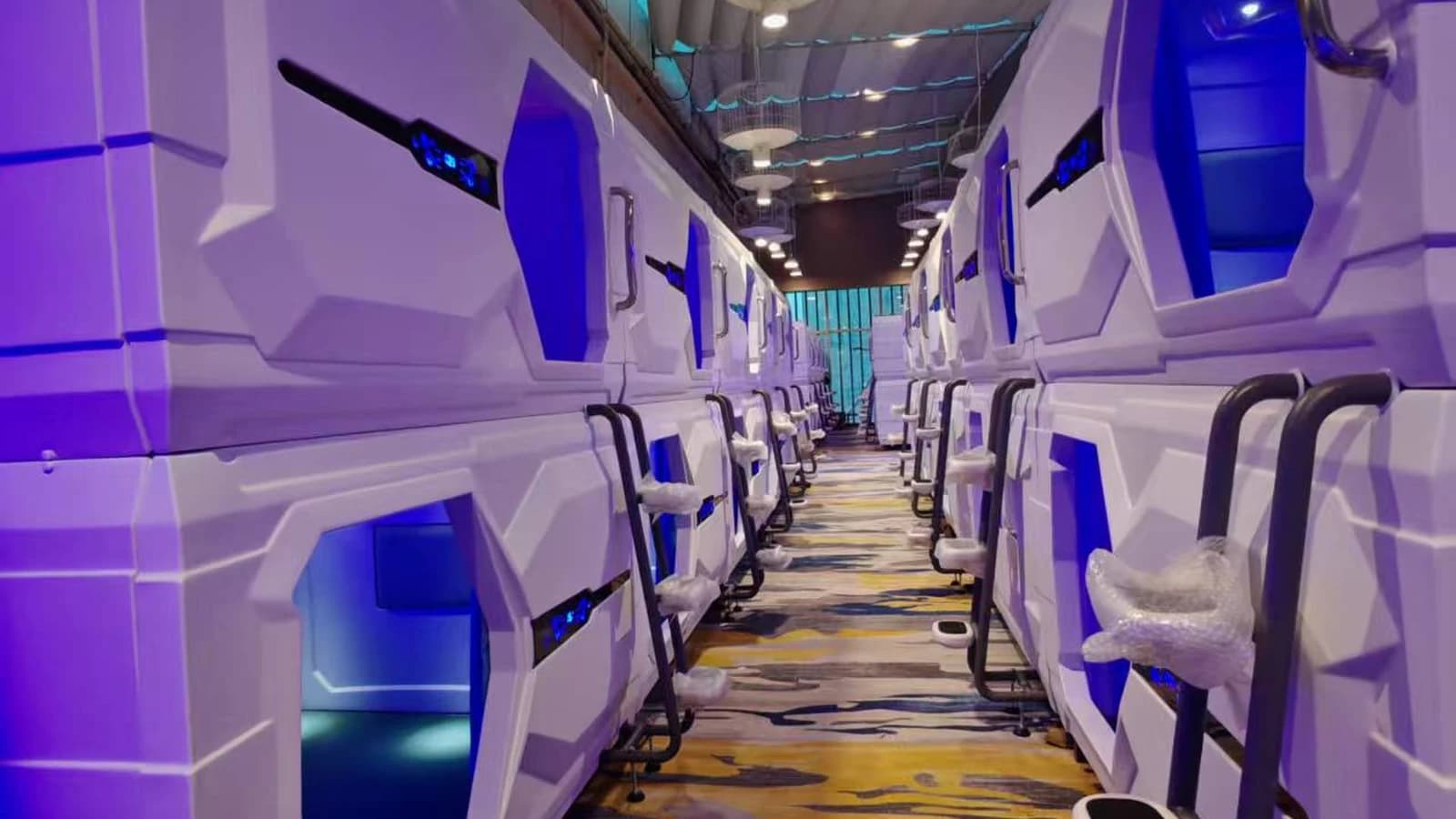
- Give each bed a privacy feature appropriate to the room type and local requirements
- Provide secure storage that guests can use without blocking circulation
- Test door, locker and access-control failures during the night shift
- Keep emergency instructions and help points visible and understandable
Review privacy and circulation in your accommodation layout
Share a room plan and operating requirements for a commercial capsule accommodation discussion. We can help identify product-planning inputs; your local design and operations teams should validate safeguarding and regulatory requirements.
Discuss a room-layout briefMake reporting private, clear and free from blame
A guest should be able to report a concern without having to explain it in a crowded reception queue or confront another guest. Provide more than one route: a trained front-desk contact, a private phone or message option, and an urgent channel for immediate danger. Explain what happens next, who will receive the report, how confidentiality is handled and how the guest can ask for an update.
The first response should not ask what the guest wore, why they chose a dorm, why they travelled alone, or why they did not act differently. Take the concern seriously, check immediate safety and accommodation needs, offer privacy, preserve factual information and ask only the questions needed to decide the next protective step. Consent, confidentiality and legal duties may differ by location; the site procedure should identify when management, security, emergency services or specialist support must be involved.
Give staff a simple response SOP for harassment concerns
A policy on a wall is not an overnight response. Train every relevant team member on a short sequence they can recall under pressure. The steps below are an operating framework: the site’s safeguarding policy, immediate risk and local requirements determine the exact action.
Do not promise an outcome that staff cannot control, such as removal of a guest in every situation. Do promise a clear process. The incident lead should decide follow-up, review whether temporary measures are needed, communicate only necessary information and avoid retaliation or informal disclosure. Maintain a restricted incident log and use de-identified patterns to improve staffing, access, lighting or allocation processes.
1. Listen without blame
Move the conversation away from a public desk where feasible, listen without questioning the guest’s choices, and explain that the team will first check what support is needed now.
2. Assess immediate safety
Ask whether there is an immediate danger, a need for urgent medical or emergency assistance, or a need to prevent contact. Follow the site’s emergency route when risk requires it.
3. Offer practical support and privacy
Offer a private place to talk and, if requested and feasible, support a room or bed move. Do not require the reporting guest to confront another person as a condition of receiving help.
4. Notify the designated lead
Alert the named incident lead or on-call manager through the defined channel. Share only the information necessary for immediate protection and response.
5. Record factual information
Record the time, location, people involved or identifiers available, the guest’s own description where they wish to give it, observed facts, immediate safety actions, people notified and the next review time. Keep opinions and unverified conclusions out of the first record.
6. Escalate and agree the next update
Define in advance who contacts emergency services, local security, management, property owners, platform support or specialist services. Local law and immediate risk determine the correct route; this article is an operating framework, not legal or emergency advice. Tell the guest what the next update point will be where it is safe and appropriate to do so.
Make the booking page part of the safety system
Accurate booking information lets guests make informed choices before arrival. State the dorm type, occupancy, bed arrangement, whether beds use curtains or closable entrances, storage arrangements, access approach, reception hours and how overnight support works. Do not hide night-time limitations behind generic wording such as “24-hour assistance” unless a real person or verified response service is available.
Booking copy should also tell guests how to request an accessible room, a lower berth, a room change or a private conversation. It should not instruct travelers to solve harassment risk through clothing, behaviour or constant vigilance. Clear information helps guests plan; the hostel remains responsible for its facilities, staff conduct and response process.
| Topic | State clearly |
|---|---|
| Dorm type | Women-only, mixed or private; capacity and bed configuration |
| Privacy and storage | Curtain or entrance type, locker availability and lock arrangement |
| Night support | Reception hours, on-call method and emergency contact process |
| Access | How room entry is controlled and how lost credentials are handled |
| Support requests | How to request a room change, accessibility support or a private conversation |
Give solo travelers useful choices without shifting responsibility
A short selection checklist can help a solo traveler compare properties: confirm the room type and layout; ask how lockers and room access work; check the route to washrooms and reception at night; save the overnight contact method; and choose a property whose information feels clear rather than evasive. These are choices, not a test a traveler must pass to deserve support.
For operators, the test is tougher: if a guest has a concern at 2 a.m., can the team answer, provide a private place to talk, make a feasible room or bed change, document the situation and activate the right escalation? If not, improve the operation before turning safety language into marketing. Privacy and safety earn trust through repeated, visible decisions.
Build a system guests can understand and staff can deliver
Hostels cannot eliminate all risk or guarantee absolute safety. They can reduce avoidable gaps by combining truthful room information, careful allocation, privacy and storage, controlled access, dependable lighting, overnight help and a confidential response path.
For a hostel or capsule accommodation project, test these decisions on the actual floor plan and operating roster before opening. The aim is a workable, respectful guest experience—not a claim that a room feature can prevent harassment.
Sources and further reading
Plan the room and the operation together
Send the room plan, intended dorm types, operating hours and project location to start a commercial accommodation planning conversation.
Frequently asked questions
Are women-only dorms enough to make a hostel safe?
No. They can be a useful accommodation choice, but they do not replace controlled access, privacy, trained staff, clear reporting and a reliable response process. No dorm type can promise absolute safety.
Should hostels avoid putting one woman in a mixed dorm with several men?
There is no universal rule or ratio, but managers should recognise this as a foreseeable comfort and risk concern. A private review and a feasible alternative can be better than allowing an automated allocation to decide without human judgment.
Do privacy curtains prevent harassment in hostels?
No. Curtains can improve visual privacy, but they cannot prevent misconduct. They work best alongside secure storage, access control, lighting, clear staff availability and a response procedure.
What should staff do when a guest reports harassment?
Listen without blame, assess immediate safety, offer practical support and privacy, document factual information, notify the designated lead and escalate according to the site procedure and local requirements.
What safety information should a hostel show before booking?
State the dorm type, bed layout, privacy and locker arrangements, access method, reception hours, overnight support and how a guest can request help or a room change.