
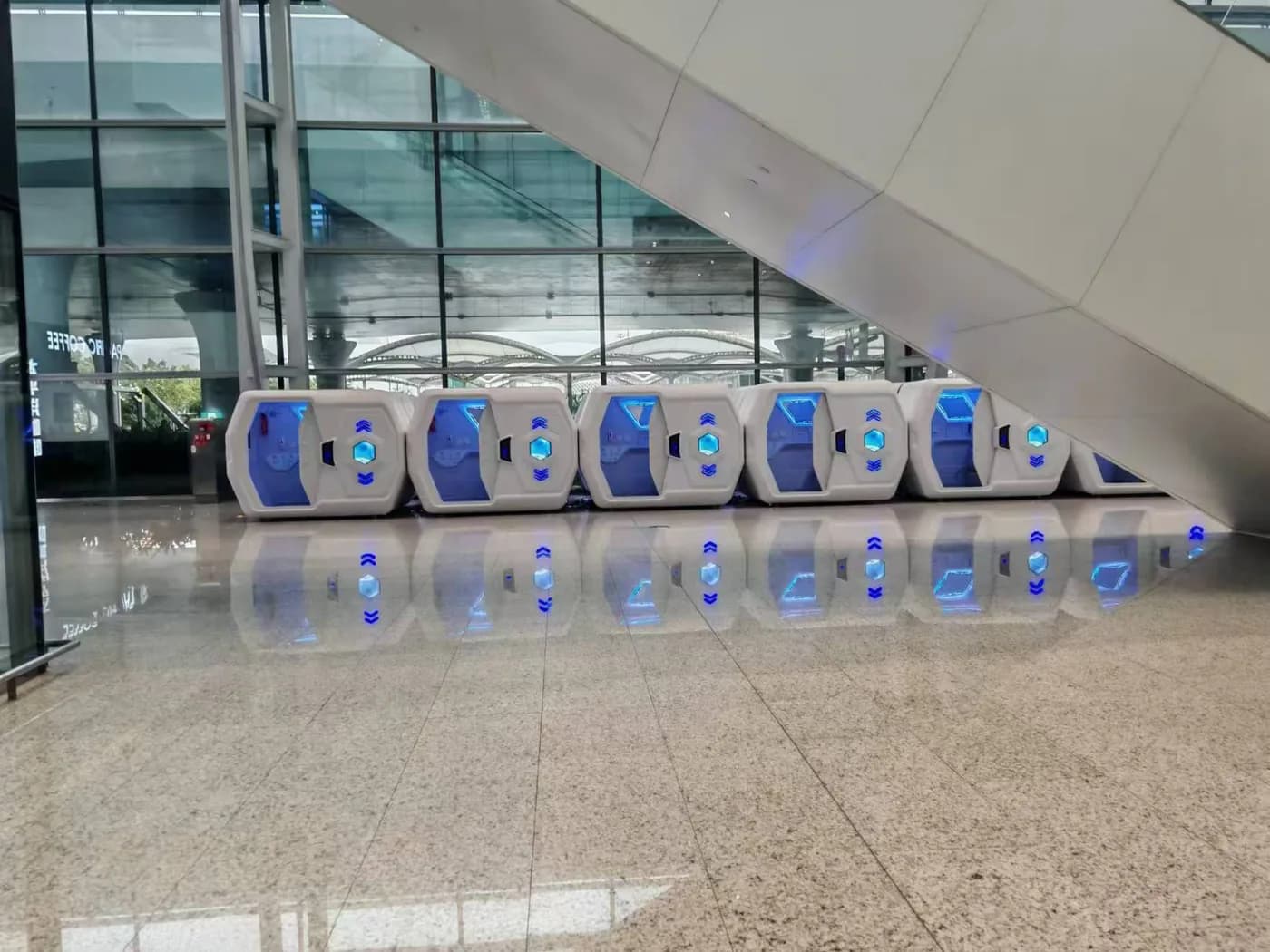
Can you sleep in an airport overnight? The rule varies by airport and zone
An airport may be open around the clock without keeping every terminal, concourse, checkpoint or service open. That distinction changes an overnight plan. Sacramento International Airport states that the public areas of its terminals are open 24 hours. However, its concourses close after the last arriving flight. San Francisco International Airport publishes separate operating hours for each security checkpoint. It also limits post-security access to ticketed passengers with a valid same-day boarding pass. These details determine where you can wait. They also affect whether you can return to your gate area before morning.
Some airports deliberately provide rest areas. Singapore Changi Airport lists free transit-side snooze lounges that operate 24 hours. It describes them as short-term rest spaces and tells passengers to keep their belongings with them. Heathrow takes a different approach. Its official guidance says it has no sleeping pods and directs overnight travellers toward airport or nearby hotels. The practical answer is therefore airport-specific, terminal-specific and date-specific.
Do not treat a social post, old travel blog or another passenger's experience as permission. Airport operations change with construction, security policy, seasonal schedules and disruption. Community discussion can show which questions people ask. Verify each answer through the airport, airline and, when relevant, the immigration authority.
- Open airport does not necessarily mean open airside concourse
- A valid ticket does not guarantee that security is screening passengers all night
- A 24-hour rest area may still be intended for short naps rather than an unrestricted overnight stay
- Immigration, baggage collection or a terminal transfer may force you landside
- Local staff instructions on the night take priority over an older web page
What should you confirm before an airport overnight stay?
Make the checks before leaving home, then check again on the travel day. A useful plan separates airport access, airline processing and personal comfort. One clear answer cannot replace the other four.
1. Check the exact terminal and overnight opening hours
Find the airport's official terminal-hours or passenger-services page. Look for wording about public areas, departures, arrivals and concourses. Do not assume that '24-hour airport' covers the entire building. If the site is vague, contact the airport. Give your terminal, flight date, arrival time and onward departure. Ask whether passengers move to a designated landside area after the last flight.
2. Confirm whether you can remain airside or must clear security again
Airside means the controlled area after security; landside means the public side before screening. A connection may look continuous on the ticket. It can still require immigration, baggage collection, a terminal change or re-screening. Changi's transit-hotel guidance distinguishes hotels inside the transit area from a hotel in the public Jewel complex. It also explains whether a traveller should clear immigration. Check the same boundary at your airport instead of applying Changi's arrangement elsewhere.
3. Verify check-in, bag-drop and checkpoint timing
An early flight does not always let you check a suitcase the night before. Airline counters and bag-drop desks may open only a set period before departure. Security checkpoints also have their own hours. If you arrive before those services open, you may have to remain landside with every bag. Confirm the airline's current instructions and keep essential medication, documents, chargers and a warm layer in your hand luggage.
4. Check seating rules and available facilities
Look for official rest zones, quiet zones, reclining seats, charging points, toilets, drinking water and late-night food. Do not assume you can lie across several seats, move furniture, block an aisle or sleep on an evacuation route. Armrests and fixed seating may make lying down impossible. A quiet gate at 10 p.m. may become an active departure area before dawn.
5. Keep a bookable backup
Identify at least one lounge, short-stay room, terminal hotel or nearby hotel before the trip. Record its last check-in time, location relative to security, transfer method and cancellation terms. A backup is especially important during weather disruption, when free seating and nearby rooms may fill quickly.
What sleeping in a public airport area is really like
Permission to remain in a terminal is not a promise of sleep. Airports are working transport buildings. Bright lighting may stay on for safety and wayfinding. Flight announcements, cleaning machines, floor polishers, waste collection, maintenance and staff conversations continue overnight. Automatic doors open, passengers arrive in waves, and a quiet corner can become cold when the crowd thins.
Temperature is one of the most common surprises. Large halls are designed for moving occupants, not for someone lying still for six hours. Pack a light insulating layer and avoid creating a setup that obstructs circulation. Eye shades and earplugs can reduce light and routine noise. Keep enough awareness to hear operational announcements, alarms or a gate change.
Seat design also sets the limit. Upright seats with armrests may support waiting, not sleeping. Floors introduce hygiene, comfort and obstruction problems. If you doze, secure passports, phones and wallets on your body. Keep luggage closed and physically connected to you. Follow airport advice to keep belongings attended. Do not ask a stranger to watch a bag, and never accept responsibility for an unknown item.
- Set more than one alarm and keep the phone charged
- Choose a lawful waiting area with staff or passenger activity rather than an isolated service corridor
- Keep exits, fire equipment, aisles, doors and accessible routes clear
- Avoid displaying cash, passports or electronics while asleep
- Move immediately if airport or security staff ask you to use another area
Who should avoid sleeping in the public terminal?
A public concourse is a poor substitute for suitable accommodation when a traveller needs dependable rest, privacy, temperature control or ready access to care. Some travellers need a more controlled setting. This includes anyone who becomes disoriented without sleep or has a condition affected by missed rest. It also includes people who need powered medical equipment or time-sensitive medication. They should plan with the airline and airport assistance service rather than rely on a bench. Medical questions belong with a qualified clinician.
Travellers with limited mobility may find fixed seating, long walks and closed overnight services especially difficult. Families with infants or young children need a controlled place for sleep, feeding, hygiene and supervision. Older travellers, people recovering from illness, pregnant travellers who are uncomfortable, and anyone who feels unsafe or highly anxious in an open public area should give greater weight to a staffed private option.
A public terminal is also unsuitable when you have valuable or numerous bags. The same applies when your itinerary may force you out of a secure zone. Choose reliable rest if a critical meeting, drive or safety-sensitive task follows arrival. Saving the room cost can be a false economy if poor sleep leaves the next day unusable.
Planning a managed rest service instead of public-area sleeping?
Review passenger dwell, terminal location, privacy, luggage and cleaning needs before comparing sleep pod formats.
Explore the Airport SolutionAirport lounge, hotel, hourly room or sleep pod: which overnight option is better?
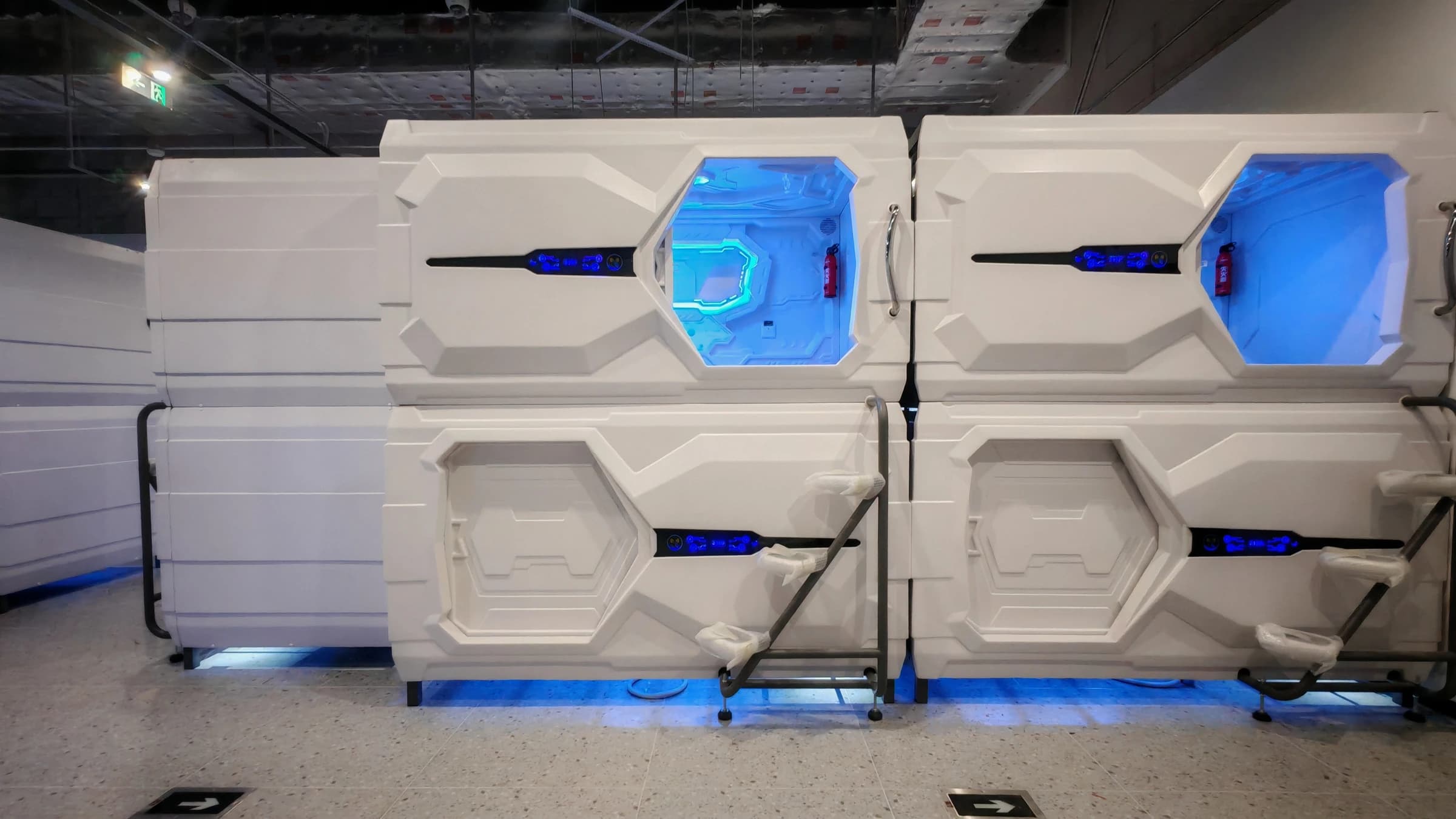
These options solve different problems. A lounge improves waiting but often has limited hours and a maximum stay. A transit hotel provides a private room without leaving the secure area where the airport offers one. A public-side airport hotel can serve departing or arriving travellers, but may require immigration and another security screening. Hourly rooms reduce the cost of buying a full night when only a short rest window is available. Sleep pods sit between open seating and a hotel room, offering a compact private rest space for a defined session.
Availability matters more than the label. Schiphol lists post-security hotels that are open 24/7. Its official page separately describes sleeping pods bookable for one to four hours during the operator's daytime opening hours. Heathrow says its airside rooms close at night. It recommends a nearby hotel for an overnight stay. Always check the specific facility's access rules and hours.
| Option | Best suited to | Privacy | Main checks |
|---|---|---|---|
| Public seating or rest zone | A short wait when the airport expressly allows access | Low | Terminal hours, seat rules, noise, temperature and baggage security |
| Airport lounge | A quieter wait with food, charging or showers | Low to medium | Opening hours, entry rules, stay limit and whether sleeping is permitted |
| Sleep pod | A private nap or defined short stay close to the terminal flow | Medium to high | Booking duration, ventilation, luggage, alarm, cleaning and airside/landside location |
| Transit or hourly room | Several hours of proper rest without paying for a conventional full night | High | Immigration boundary, minimum booking, shower access and check-in time |
| Airport or nearby hotel | Overnight sleep, families, health needs or work the next day | High | Transfer time, last shuttle, re-screening and morning departure buffer |
What should a well-managed airport sleep pod provide?
A sleep pod should offer more than visual privacy. The occupied space needs a defined air-circulation approach coordinated with the terminal or room HVAC. The enclosure should reduce routine light and speech disturbance. It must not cut the user off from emergency instructions. Charging should match the destination electrical system. Controls should be simple enough for a tired international traveller to understand.
Luggage needs an explicit answer. Depending on the operating concept, that may be monitored storage, a locker, a space beside the pod, or a clearly stated size limit. Bags must not narrow an aisle or interfere with access. The booking description should tell users what fits before payment, not after arrival.
Fire and life-safety planning belongs to the complete installed zone, not to a marketing adjective attached to the shell. The local airport, design team and relevant authorities must review the complete plan. This review covers escape, detection, alarm audibility, suppression where required, emergency lighting, electrical connections, accessibility and staff response. A material or component report does not certify the complete pod installation.
Cleaning is equally operational. The operator needs a clear reset procedure. It should cover linen, mattress inspection, touch surfaces, vents, controls, waste, lost property and release back into the booking system. Finishes should have documented cleaning guidance. Maintenance access should not require dismantling the entire rest zone.
- Air circulation coordinated with room ventilation and temperature control
- Useful acoustic and light separation without blocking alarms or staff access
- Destination-appropriate charging and clear, intuitive controls
- Defined luggage capacity or nearby managed storage
- Documented fire, electrical, accessibility and emergency-review scope
- A repeatable cleaning, inspection, lost-property and maintenance process
A simple decision rule for tonight's airport stay
Use public seating only when the official rules are clear and your wait is manageable. Your bags must stay under control, and the consequences of poor sleep should be low. Choose a lounge when you mainly need a calmer place to sit, charge devices, eat or shower. Check that its opening hours cover your wait. Choose a sleep pod or hourly room when privacy and a short block of real rest matter more than full hotel space. Choose a hotel when you need an overnight bed, a private bathroom, family space, medical comfort or reliable rest before the next day's responsibilities.
Then calculate the usable rest window. Start with the connection time and subtract walking, immigration, baggage, check-in, security and a safe boarding buffer. A nominal eight-hour layover may leave far less time behind a closed door. The best option is the one that fits the real window without creating a missed-flight risk.
Planning advice for airport operators considering sleep pods
For an airport operator, the passenger question—'Can I sleep here?'—is a demand signal. It is not a complete business case. Map who needs rest, at what hours, on which side of security and for how long. Separate disrupted passengers, scheduled long connections, early departures, airline crews and lounge users. Each group has different access, price sensitivity, luggage and service needs.
Choose the zone through measured passenger flow and operational constraints. The layout must protect circulation, accessible routes, exits, cleaning access, staff visibility and emergency response. Confirm delivery access, power, room HVAC, network needs, drainage if showers are included, acoustic conditions and housekeeping storage before fixing the unit count. A row that fits on a sales drawing may not fit the complete operating zone.
Write the operating model before selecting hardware. Define booking length, buffer time, identity checks, access control and oversleep handling. Also define cleaning release, lost property, fault isolation, refunds, customer support and overnight staffing. Test how the service behaves when flights are cancelled and demand surges. Where demand is uncertain, a measured pilot can show occupancy by hour and cleaning time. It can also reveal failure points and the need for luggage or accessible alternatives.
For procurement, compare the written configuration, not a rendered image. Ask for dimensions, materials, ventilation and electrical interfaces. Review cleaning guidance, maintenance access, included items, packing and installation information. Any evidence should match the proposed configuration. GEELYE's airport sleep pod planning guide covers that operator and tender stage in more detail.
Acceptable does not always mean suitable
Sleeping in the airport may be acceptable for a ticketed traveller in a permitted, open area. It can also be uncomfortable, insecure or simply impossible when a terminal closes, a checkpoint stops screening or an itinerary forces you landside. Verify the current rules first, protect your belongings and judge the option against your own health, mobility and need for reliable rest.
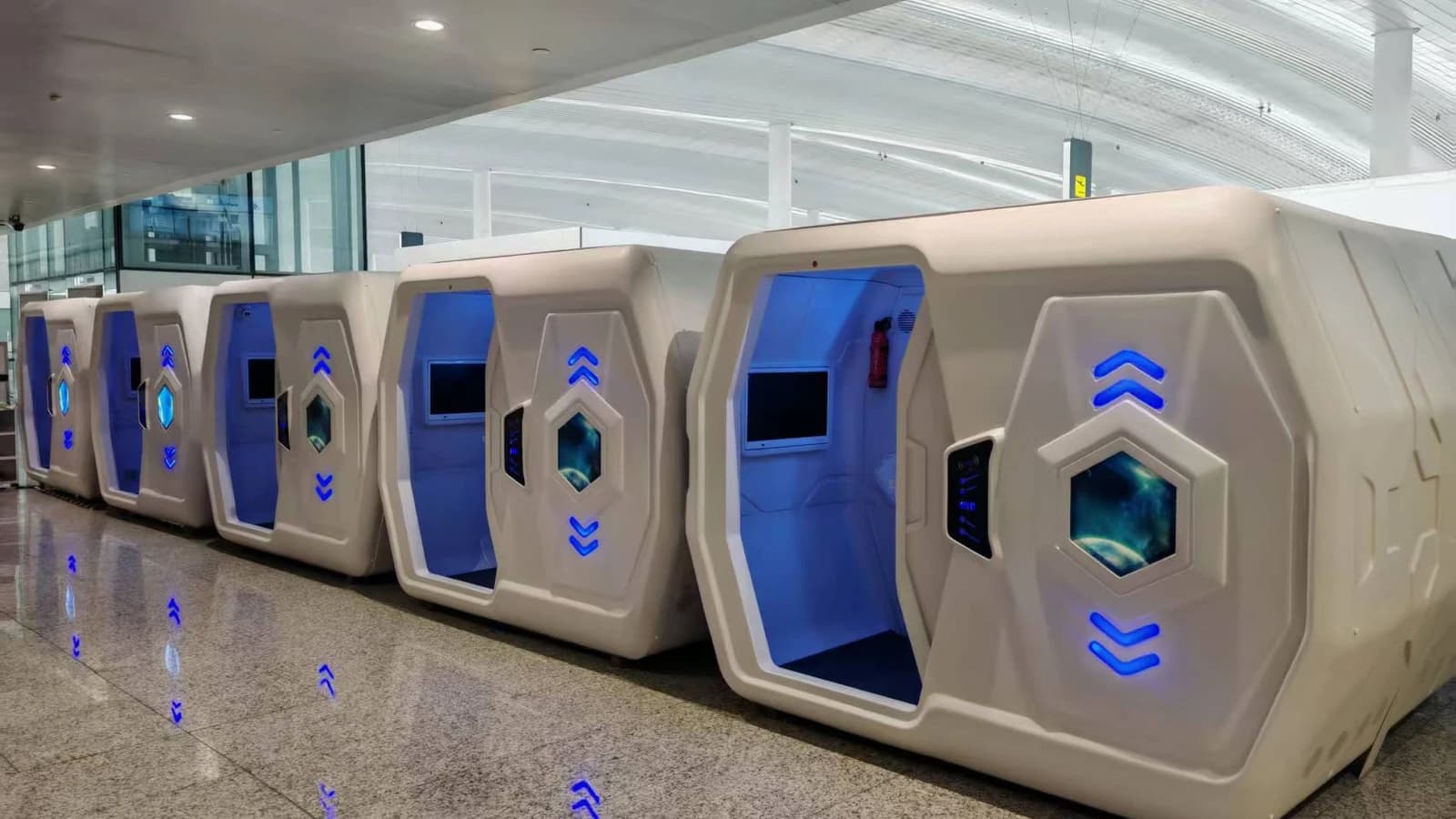
For travellers, the sensible choice may be a lounge, hourly room, hotel or airport sleep pod. Each can be better than an improvised night on public seating. For airport operators, the gap between permission and suitable rest creates a service opportunity. A managed zone should treat ventilation, acoustics, power, luggage, cleaning, accessibility and life safety as operating requirements.
Sources and further reading
- San Francisco International Airport — Check In & Security ↗
- Sacramento International Airport — Frequently Asked Questions ↗
- Singapore Changi Airport — Free Snooze Lounges ↗
- Singapore Changi Airport — Transit Hotels ↗
- Heathrow Airport — Hotels Near Heathrow ↗
- Amsterdam Airport Schiphol — Hotels Before and After Security ↗
Related GEELYE resources
Discuss an airport sleep pod zone with real project inputs
Share the airport zone, available plan, target capacity, stay model, destination and required opening stage. GEELYE can identify relevant product information and the questions your local project team still needs to resolve.
Frequently asked questions
Is it legal to sleep in an airport overnight?
There is no single worldwide rule. An airport may allow ticketed travellers to wait overnight in certain public or secure areas, restrict sleeping, close a concourse, or ask passengers to leave. Check the official airport rules for the exact terminal and follow staff instructions.
Can I stay past security during an overnight layover?
Sometimes, but not always. Your connection may require immigration, baggage collection, a terminal transfer or re-screening, and some post-security areas close after the final flight. Confirm the connection process with the airport and airline before travelling.
Is sleeping in an airport safe for luggage?
No public area can remove theft, loss or unattended-baggage risk. Keep documents and valuables secured on your body, keep bags closed and physically connected to you, and follow airport instructions to keep belongings attended. Use managed storage when available.
Are airport lounges open all night for sleeping?
Most lounge access depends on the individual operator's hours, entry rules and maximum stay. Comfortable seating does not necessarily mean sleeping is permitted. Check the specific lounge for your terminal, travel date and boarding-pass status.
Are airport sleep pods better than sleeping at the gate?
A managed sleep pod can provide more privacy, light control, charging and a defined cleaned space than gate seating. Suitability still depends on ventilation, acoustics, luggage arrangements, booking time, accessibility, price and whether the pod is reachable airside or landside.