
Why ‘manufacturer’ needs verification
The word manufacturer is used loosely in international sourcing. A seller may own a factory, share ownership with a related factory, operate a sales company beside a production company, outsource selected processes, or buy a finished product from another producer. None of these structures is automatically unacceptable. A capable trading company can coordinate design, quality and export work well; a factory can still manage an order poorly. The buyer's first task is to understand the actual structure rather than force every supplier into one label.
That structure affects responsibility. If the quotation comes from one company, the payment goes to another and production happens at a third site, who is responsible for drawings, material substitutions, defects and warranty claims? The answer should be clear before a deposit is paid. Review the company, contract party, payment beneficiary and production entity together. They should be consistent—or any differences should be documented and explained. A documented relationship, consistent contract language and a defined quality owner may be workable.
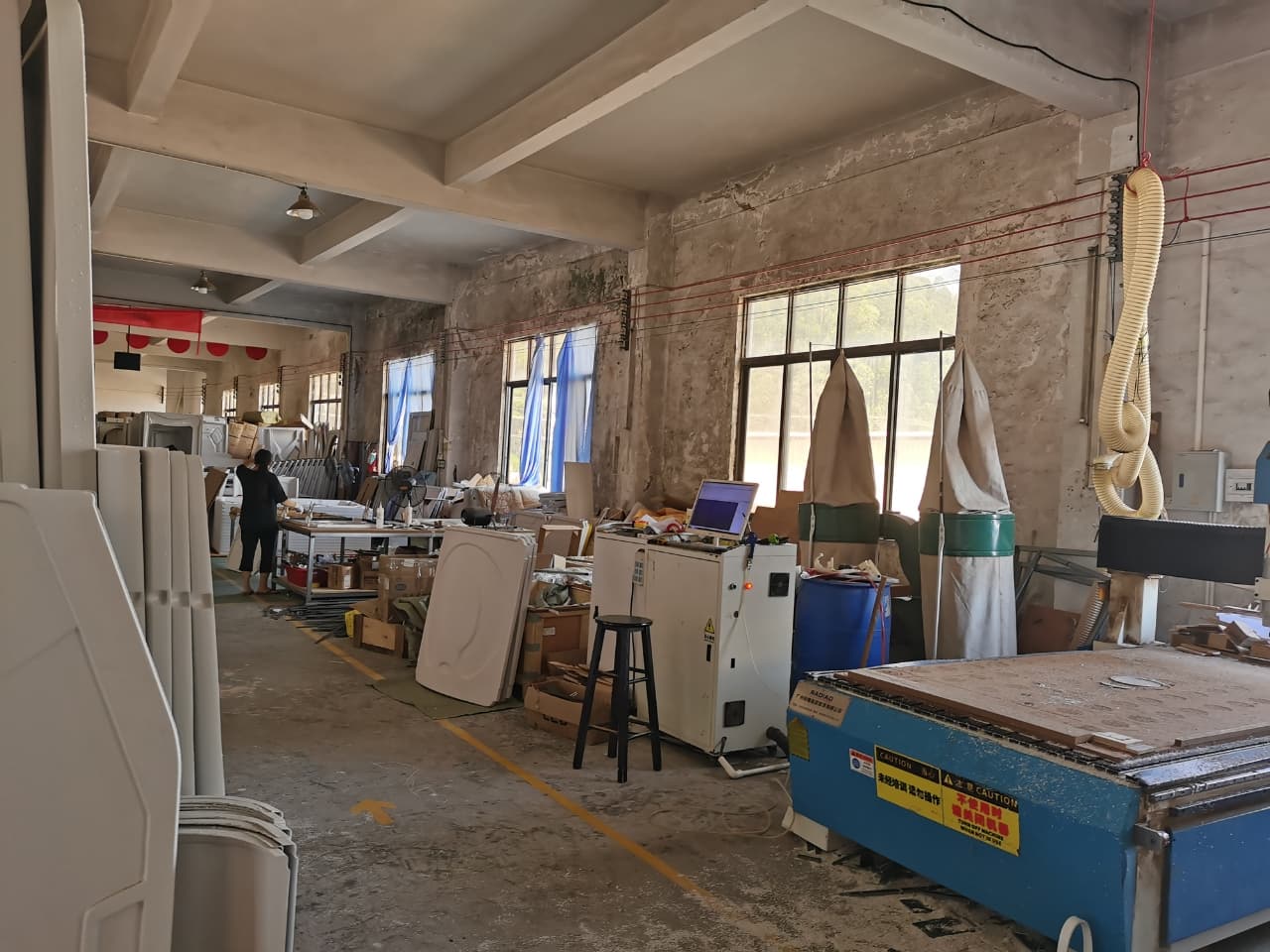
Verification is therefore not a hunt for a single dramatic proof. A business license confirms that an entity exists, not that it makes the quoted capsule bed. A factory video shows a place, not necessarily the place that will produce your order. A good sample shows one unit, not the controls for repeat production. Useful due diligence connects identity, facility, process and ordered product into one traceable story.
The four-link verification framework
Start at the legal entity and move toward the physical product. Each link should support the next. Company records identify the party making commercial commitments. Facility evidence shows where the relevant work is controlled. Process evidence shows how materials become a finished pod and where quality is checked. Product evidence ties those controls to the exact model, configuration and shipment you intend to buy.
A weak link does not always require immediate rejection, but it does require an explanation and a control. For example, subcontracted metal fabrication may be reasonable if the supplier discloses it, approves drawings, checks incoming parts and remains contractually responsible. The risk comes from hidden dependencies, undefined ownership or evidence that cannot be connected to the order.
- 01Company
- 02Facility
- 03Production Process
- 04Product
What to check at each link
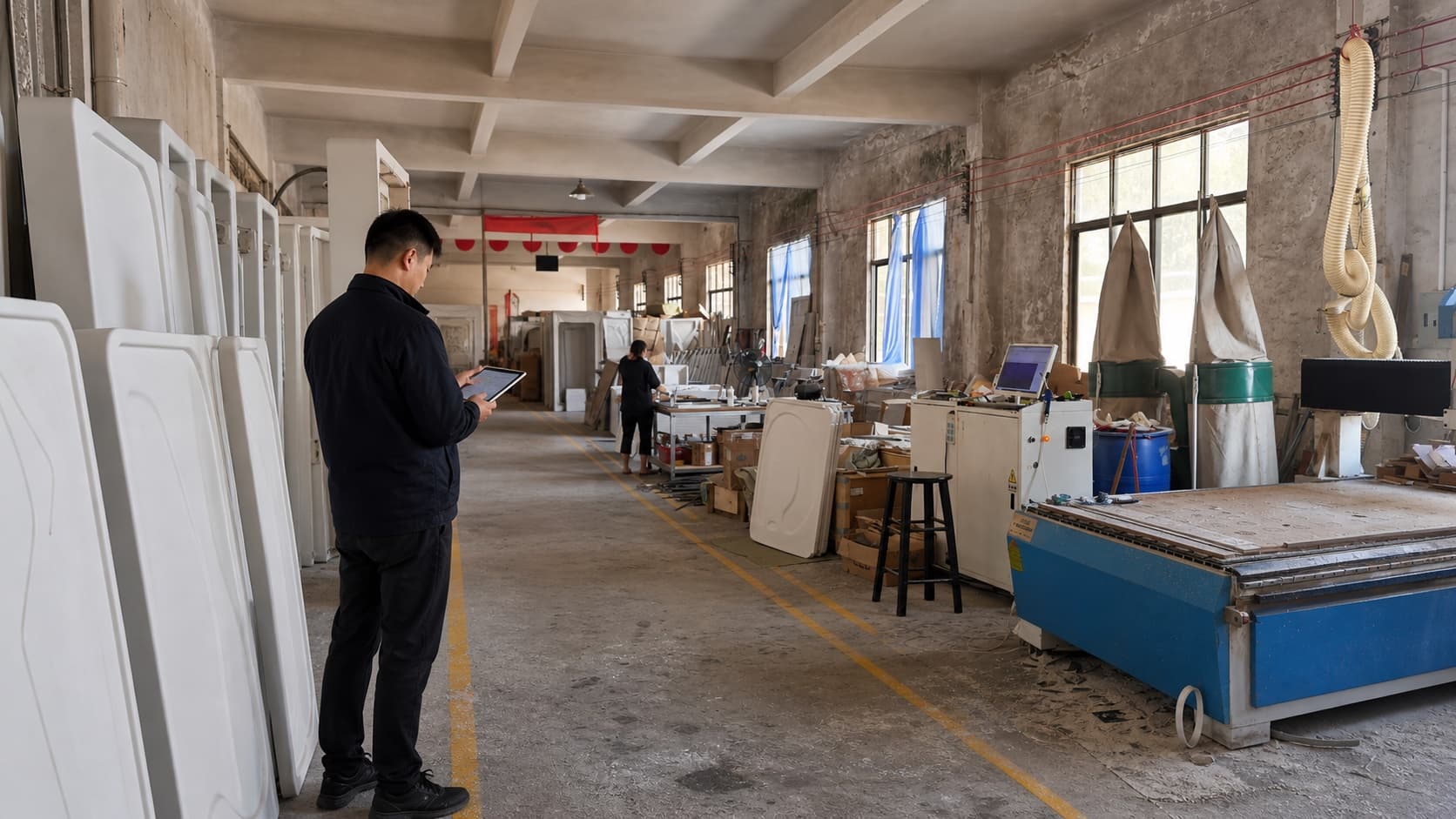
Use the same questions for every shortlisted supplier. Ask for current, legible evidence and record who supplied it, when it was received and which order or model it supports. Sensitive documents may be redacted, but the remaining information still needs to be sufficient for verification. Where the order value or risk justifies it, ask an independent auditor, inspection company or local professional to check original records and the physical site.
Do not score the links in isolation. A supplier may provide a valid business license and a convincing workshop tour, yet still fail to connect the sample specification with the production order. Another may have a modest facility but excellent traceability, clear outsourced-process controls and reliable inspection records. The purpose of the table is to expose unanswered questions, not to reward the largest photo gallery.
| Verification questions | Evidence to request | Warning signs |
|---|---|---|
| Company — What is the supplier's exact legal name? Which entity signs the contract, issues the invoice, receives payment and carries the warranty obligation? | Current business registration or license; registered address; quotation and pro forma invoice; bank beneficiary details; written explanation of any group-company or export-agent relationship. | The supplier’s legal entity, contracting party and payment beneficiary do not align—and no documented explanation is provided. Payment to an unrelated personal or third-party account is an additional warning sign. |
| Facility — Where will the quoted order be produced and stored? Does the supplier own, lease, share or contract the site? Can the location and responsible team be independently checked? | Full factory address; lease or ownership evidence where appropriate; time-stamped live video; on-site audit; utility or site records; production areas and product-specific work in progress. | Only polished promotional images are provided; the address changes without explanation; live access is repeatedly avoided; the tour shows a showroom but no relevant materials, workstations or responsible staff. |
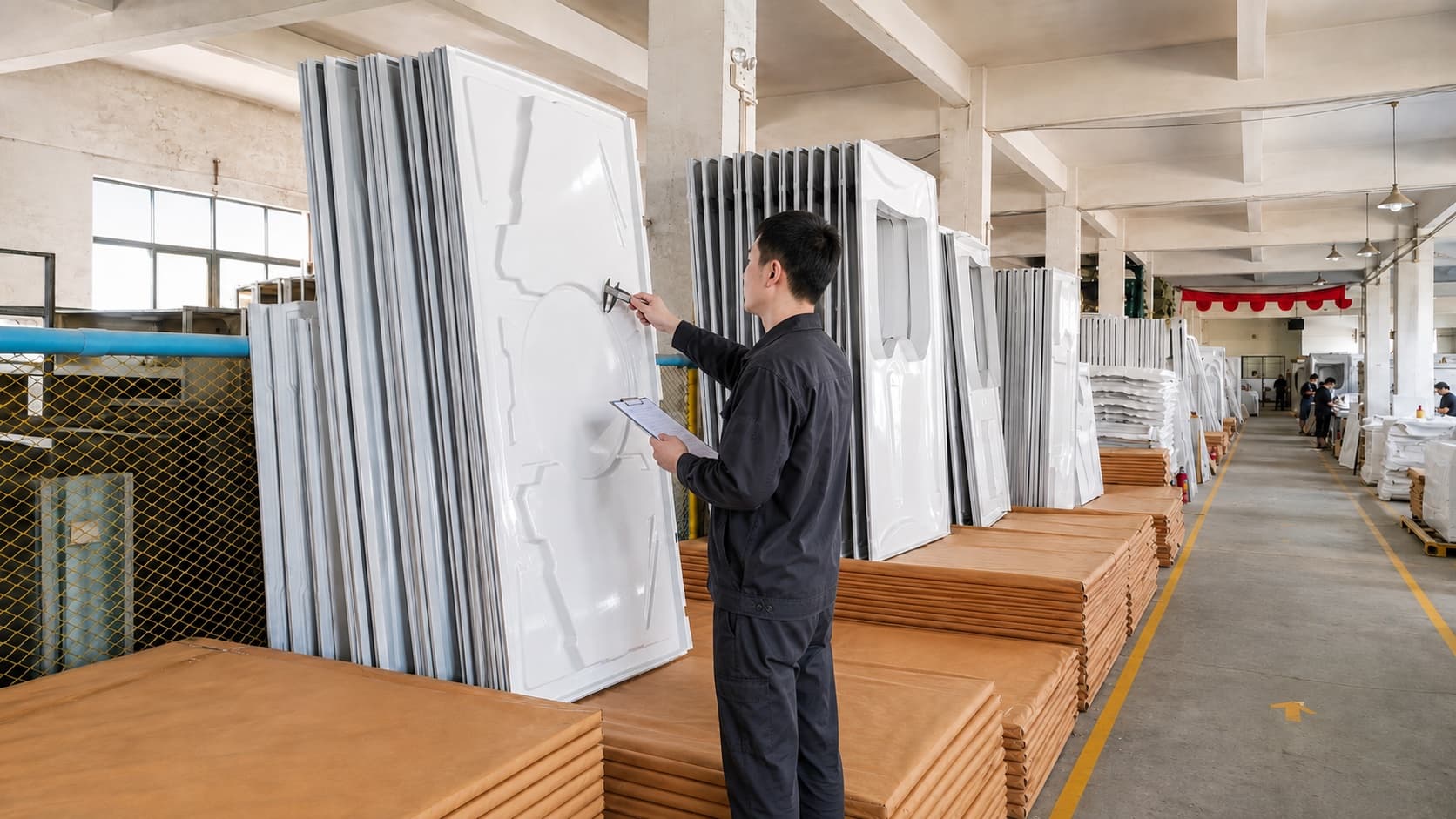
| Production process — Which operations are performed in-house, which are subcontracted, and who controls drawings, incoming parts, assembly, testing and release? | Process map; equipment list; work instructions; approved drawings; incoming and in-process inspection records; capacity basis; subcontractor-control records; non-conformance and recheck examples. | The supplier claims to make every component without a coherent process; equipment cannot be linked to the product; capacity claims have no shift, cycle-time or order-book basis; inspection is described only as ‘checked before shipping.’ |
| Product — Is the evidence for the same capsule-bed family, material grade, electrical configuration and packing scope that will be ordered? What defines an acceptable bulk unit? | Comparable project or production records; approved sample; frozen specification and bill of materials; drawings; relevant test reports; functional checklist; packing standard; pre-shipment inspection criteria. | The sample and bulk specification are not linked in writing; reports cover a different model, material or component; accessories and exclusions are unclear; acceptance standards will be decided only after production. |
A capsule-bed-specific verification checklist
Generic supplier due diligence is only the first layer. A capsule bed combines structural parts, finished surfaces, electrical components, ventilation or circulation components, guest controls and export packing. The final configuration can also affect room layout and installation. Verification should follow the product from its hidden structure to its site handover, because a visually convincing shell can conceal unresolved interfaces.
Ask the supplier to mark each item as standard, optional, customized, supplied by a subcontractor or provided by the buyer. Then connect the answer to a drawing, bill of materials, sample approval or inspection point. Terms such as premium, smart, flame-retardant and soundproof are not specifications by themselves. Request the measurable requirement and the exact evidence scope.
Structure and shell or board work
Confirm the structural-frame material and connection method, the shell or engineered-board specification, visible finish, panel thickness where relevant, edge and joint treatment, access openings and the method used to control dimensions. For stacked arrangements, obtain the approved assembly drawing and project-specific installation conditions. Ask how damaged or out-of-tolerance parts are identified before they become hidden.
- Model-specific external dimensions, internal clear dimensions and tolerances
- Steel-frame or support-component specification and connection details
- ABS shell or board grade, thickness, finish and matching evidence
- Surface inspection criteria for scratches, colour variation, cracks, edges and fit
Ventilation and electrical assembly
Confirm the destination voltage and frequency, input connection, internal low-voltage circuits, sockets, lights, switches, fans, protection devices, cable routing, labels and maintenance access. Ask which checks occur before panels close and which functions are retested on completed units. Pod-level circulation does not replace the building's ventilation, thermal or fire-safety design; those interfaces should be reviewed by qualified local professionals.
- Approved electrical schedule and connection information for the ordered configuration
- Traceable component list and relevant component documents
- Functional test covering lights, sockets, controls, fans, locks and optional equipment
- Clear separation between product information and local building approval
Materials and flame-performance evidence
Where a project specifies flame-retardant materials, match the report to the material description, grade, thickness or sample condition, test method, issuing body and current supplied configuration. A material or component report should not be presented as certification of the complete capsule bed. Ask how approved materials are identified at receiving and protected from unauthorized substitution.
- Report applicant, manufacturer, sample description, test method and issue date
- Written link between the report and the bill-of-material line used for the order
- Incoming-material identification and change-approval records
- Local review of the complete installed accommodation and required approvals
Packing, installation and release
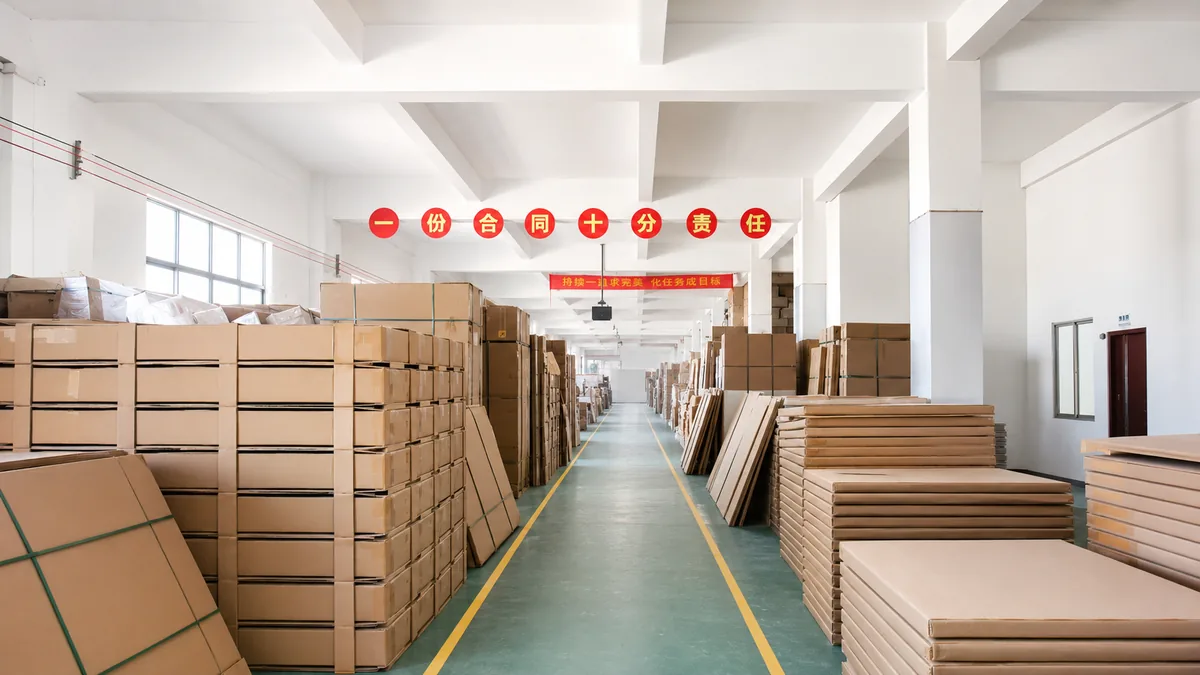
Confirm how finished surfaces, electrical parts, hardware and loose accessories are protected and counted. Request package marks, a preliminary packing plan, installation documents and a written pre-shipment checklist. If parts will be distributed across rooms or installation phases, agree the marking logic before packing. The buyer's inspector should be able to trace a sampled carton or completed pod back to the approved order.
- Packing materials, corner and surface protection, moisture controls and package marks
- Accessory and spare-parts count by model, room or batch
- Assembly drawings, wiring or connection information and installation sequence
- Release criteria for quantity, appearance, function, configuration and packing
Before paying the deposit
A deposit changes the buyer's leverage. Complete the highest-value checks while there is still time to clarify scope, change suppliers or add contractual controls. The following sequence is not a substitute for legal advice, but it creates a practical procurement record and keeps commercial approval connected to technical approval.
For a standard repeat model, some steps may be completed through drawings, current evidence and a representative inspection. A new OEM design or a large multi-site order usually deserves deeper sample, audit and staged-inspection controls. Scale the effort to the financial, safety, schedule and reputational exposure rather than using one fixed procedure for every purchase.
- 01Approve the sample or reference configuration
Record what the sample proves, what differs from the planned order and whether approval is physical, photographic or document-based. Keep dated photos and a signed deviation list.
- 02Freeze the specification
Issue one controlled schedule covering model, dimensions, materials, colours, electrical configuration, ventilation components, accessories, branding, spares, packing and installation documents.
- 03Reconcile the PI, contract and payment identity
Check the legal seller, contracting party, bank beneficiary, product description, quantity, Incoterm, milestones, inspection rights, change control and remedies. They should be consistent—or any differences should be documented and explained before payment.
- 04Complete company and factory verification
Resolve ownership, related-company, trading-company and subcontracting questions. Complete a live walkthrough or independent factory audit when the order risk warrants it.
- 05Define production checkpoints
Agree when drawings, materials, first completed units, in-process functions and packing will be reviewed, and who can approve or reject changes.
- 06Book third-party inspection
Give the inspector the frozen specification, sampling plan, defect categories, functional tests, quantity checks, packing criteria and reporting format before the inspection date.
- 07Release the balance against agreed evidence
Confirm corrected defects, final inspection status, packing list, invoice, transport or origin documents and shipment-release conditions before paying the balance or authorizing dispatch.
Keep one verification file for the order
Supplier verification becomes less useful when evidence is scattered across chat messages and personal inboxes. Create one order file with the legal-entity check, facility address, audit or video record, approved specification, drawings, bill of materials, sample approval, test evidence, change log, inspection plan, final report, packing list and payment approvals. Give each important document a date and revision.
Record unresolved items as unresolved. A missing answer should not quietly become an assumption, and an illustrative image should not become proof. If a supplier explains that a process is outsourced, note who performs it and how incoming quality is checked. If a test report covers only a component, label it that way. This discipline makes the final purchasing decision easier to defend and makes repeat orders safer to manage.
The aim is not to create paperwork for its own sake. It is to ensure that the product accepted at inspection is the product described in the contract, made through the disclosed supply chain and packed for the agreed shipment.
Verification is a chain, not a badge
A reliable decision comes from evidence that connects the contracting company to the facility, the facility to a controlled production process, and that process to the capsule bed you will actually receive. Gaps can sometimes be managed, but they should be visible, explained and assigned to someone before money changes hands.
Keep the evidence with the order so later approvals, inspections and repeat purchases refer to the same controlled record.
Related GEELYE resources
Use this checklist when evaluating any commercial sleep-pod supplier.
Apply the same Company → Facility → Production Process → Product standard to every supplier on the shortlist.
Frequently asked questions
Is a factory certificate enough to verify a capsule bed manufacturer?
No. A business license, audit certificate or platform badge can support one part of due diligence, but it does not prove the complete chain. Check the legal identity, contracting party, payment beneficiary, facility, relevant production process and exact ordered product. These details should be consistent, or any differences should be supported by a documented relationship and written explanation. Also check who issued each document, what it covers and whether it is current.
Can a trading company still be a suitable capsule bed supplier?
Yes. A trading company can be suitable when it discloses the production arrangement, controls specifications and changes, provides access to the relevant factory and inspection, and accepts clear contractual responsibility. Compare the actual coordination and quality system. The risk is not the label; it is an opaque supply chain or responsibility that moves when a problem appears.
What should be included in a capsule bed pre-shipment inspection?
The inspection should confirm identity and quantity, selected model, dimensions or critical fit points, visible finish, material and colour references, electrical and ventilation functions, doors or curtains, locks, accessories, labels, spare parts, package protection and shipping marks. Use the approved specification, sampling plan and defect definitions, then require correction and recheck rules.
Is a live factory video call enough for supplier verification?
A live call is useful but rarely sufficient for a material OEM order. Ask for a continuous walkthrough that shows the exterior or address context, responsible staff, relevant materials, work in progress, equipment, assembly, testing and packing. Combine it with legal-entity checks, product documents and inspection. For higher-risk orders, use an independent on-site audit.
When should a buyer use a third-party factory audit or inspection company?
Consider independent support when the order value is high, the design is new, travel is impractical, identities or facilities are difficult to verify, local safety requirements are demanding, or a failed shipment would seriously affect the project. Define the audit and inspection scope yourself; a generic checklist may miss capsule-bed-specific structural, electrical, material and packing risks.