
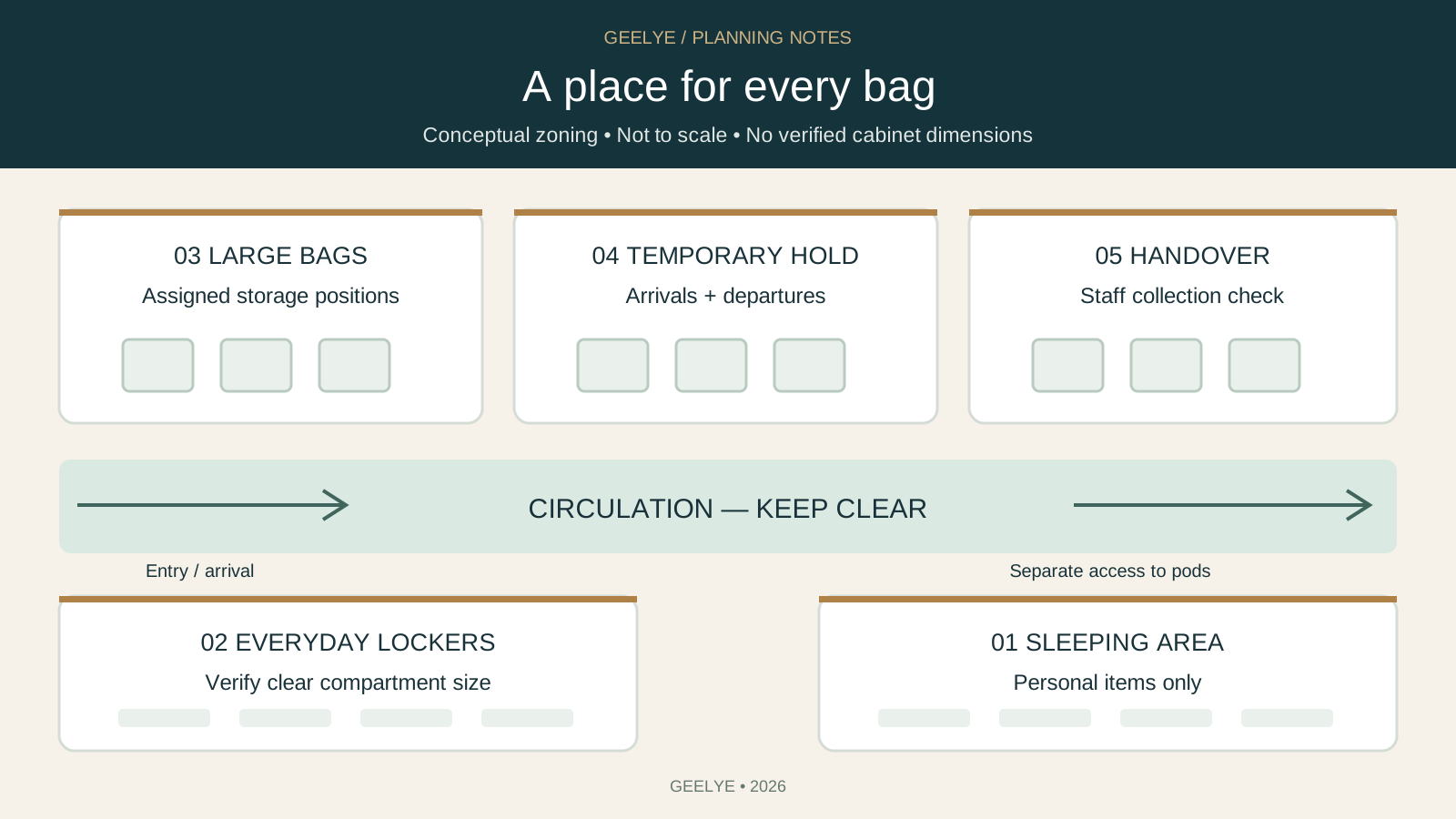
1. Give each bag a storage zone
Plan four functions: personal items within the pod, everyday bags in allocated lockers, large luggage in a separate area, and temporary holding for arrivals and departures. These functions can share a room if the operating controls work, but they should remain identifiable. A guest should know where to put a backpack without asking another guest to move a suitcase.
Inside the sleeping space, keep only the items the guest needs at hand, within storage provided and confirmed for the selected model. Do not assume that every capsule includes a safe, shelf or luggage compartment. Outside the pod, locate regularly accessed storage where opening a locker and sorting belongings will not repeatedly disturb sleeping guests. A large bag should not need to travel up a pod ladder.
- Personal items: a confirmed shelf, compartment or safe, with model-specific limitations.
- Everyday luggage: an assigned locker with a measured usable opening.
- Large or unusual bags: a designated position with an agreed handling method.
- Temporary holding: separately identified arrivals and departures, with collection times.
2. Specify hostel lockers using actual clear dimensions
A cabinet's outside width, depth and height tell you how much floor and wall space it occupies. They do not tell you which suitcase fits. Obtain the internal clear width, depth and height of each compartment, plus the clear door opening. Hinges, locks, shelves, frames and a raised threshold can reduce the usable space or make insertion awkward even when the bag would fit inside.
Measure representative bags with wheels, handles and external pockets included. Record the orientation in which each bag enters and rests. Test insertion, door closure and removal using the assembled sample, without forcing the zipper or compressing the case. If guests need to open a suitcase to repack it, include a separate place to do that; a locker that stores a closed case does not necessarily let it open inside.
No verified GEELYE luggage-cabinet dimensions or measured luggage fit test are available in the evidence reviewed for this article. The diagram below identifies what must be measured; it is not a cabinet specification. Keep the measurement fields marked 'To be verified' until the selected cabinet drawing, dated measurements and sample fit results are supplied. Capsule exterior dimensions must never be substituted for locker dimensions.
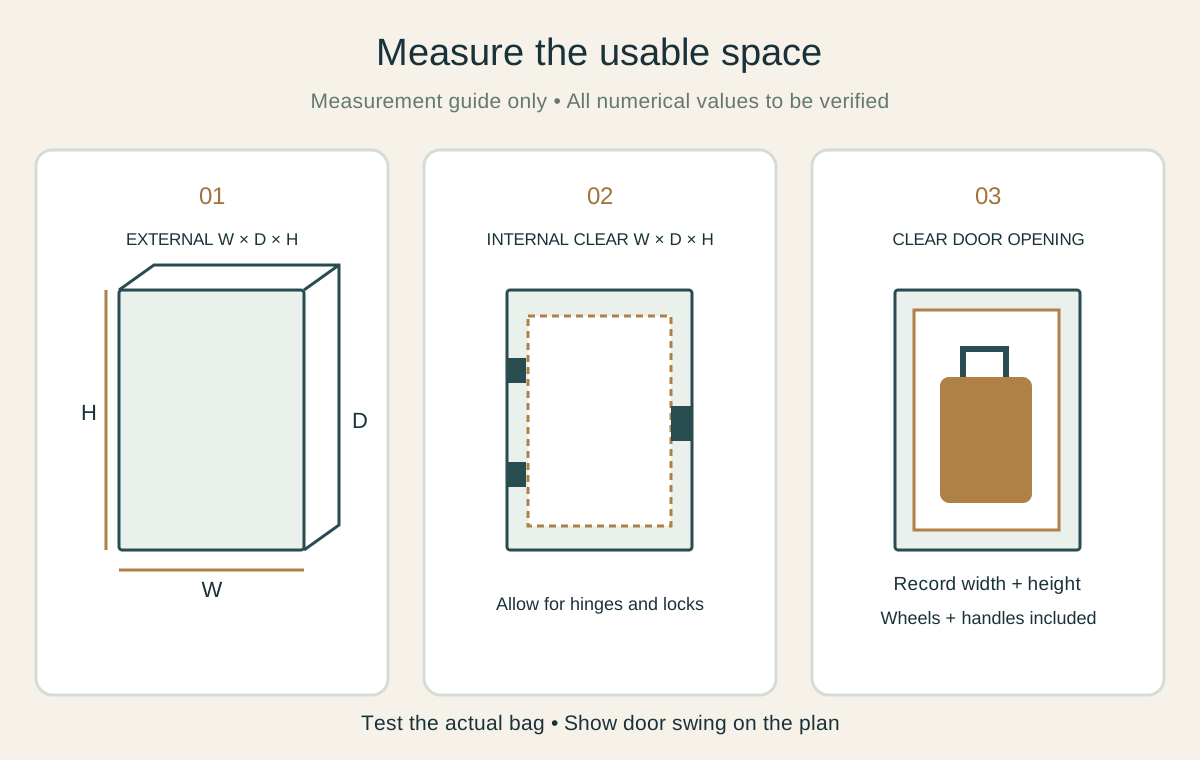
| Record | Measurement or evidence needed |
|---|---|
| Cabinet footprint | External W × D × H; model and drawing revision |
| Usable compartment | Internal clear W × D × H after fittings |
| Door opening | Clear width and height; threshold and hinge intrusion |
| Operating envelope | Door swing, drawer extension and bag handling space |
| Real bag trial | Bag W × D × H including wheels; photo, orientation, result and date |
3. Separate small bags, large suitcases and overflow
Use your actual guest mix to decide how many positions each luggage category needs. A cabin-sized case, a long backpack and a rigid checked suitcase can occupy space very differently. Labels such as 'small' and 'large' are only working categories until you define them using measured test bags. Avoid promising that all airline cabin bags fit a particular compartment.
Reserve a clearly marked zone for items outside the normal locker range and agree staff handling before accepting them. Heavy cases should not depend on guests lifting them into high compartments. Check shelf load ratings, cabinet stability and any required fixing with the selected supplier. Keep spare capacity usable: it should be a designated storage position, not an empty patch of corridor that disappears when the hostel gets busy.
- Record bag counts and sizes by time period, rather than assuming one identical bag per bed.
- Assign bag positions and locker numbers separately from bed numbers when turnover overlaps.
- Define an acceptance rule for oversized items and the response when all suitable positions are full.
4. Plan early-arrival and post-checkout luggage storage together
Early luggage drop-off is a separate service from early access to a bed. State when bags can be accepted, who can use the service, whether a fee applies, the collection deadline and any restrictions. Give departing guests the same clarity about post-checkout luggage storage. These are policies for the operator to set; this guide does not promise that every capsule hostel offers either service.
Count the peak number of bags in custody at the same time: occupied overnight storage plus arriving guests' bags plus departing guests' bags, allowing for any genuine sharing of capacity. Do not add daily totals without looking at the timing, and do not count a locker twice while a previous guest still controls it. A simple hourly record of deposits and collections helps expose the busiest overlap.
For illustration only, 18 occupied bag positions, 7 early-arrival bags and 9 bags left after checkout require 34 positions at that moment if each bag uses one position and the groups do not overlap. This is arithmetic, not a GEELYE project result or a recommended capacity ratio. Add the site's agreed contingency and test which positions actually accept the large cases.
5. Use a traceable deposit and collection procedure
For a staffed luggage store, issue a unique reference connected to the guest record, the number of bags and their storage positions. Give the guest a matching claim record and put an identifier on each accepted item. Record the deposit time, expected collection time and staff handover. Use only the personal information needed under the operator's applicable policy; avoid displaying names or room details on public-facing labels.
At collection, match the claim reference to the custody record, confirm the number and identity of the bags, and record their release. A person who points at a suitcase or knows a bed number has not completed a collection check. If the claim record is missing, pause release and follow a documented supervisor verification process using the original deposit record. Do not improvise by letting the claimant inspect everyone else's belongings.
Self-service lockers need their own process: explain assignment, access expiry, lost keys or codes, staff overrides and reset checks between guests. Restrict and log staff access as appropriate to the system. Carry unresolved collections and overdue items into the next shift's handover, and apply the operator's stated uncollected-property procedure.
- 01Accept and identify each bag
- 02Record its position and collection deadline
- 03Match the claim at collection
- 04Record release or escalate a mismatch
6. Keep locker use and queues out of circulation routes
Draw the cabinet in use, not only with its doors closed. Include open doors, pulled-out trays, the person handling a bag and anyone waiting. Check whether two facing lockers can be used together without pushing a guest into a pod entrance or blocking another route. Place the handover point so that a queue remains in a planned waiting area, with staff able to reach the storage positions.
Keep access to pods, stairs, exits, cleaning and building equipment clear. The UK Health and Safety Executive identifies obstructions in walkways as a cause of trips and advises keeping walkways clear. That general principle supports this layout check; it does not establish an aisle width or building approval for your project. Have the responsible local designer confirm circulation, accessibility and escape requirements against the actual site.
The conceptual zoning diagram at the top of this article is not a measured floor plan or an approved escape layout. It assumes a separate luggage area beside a staffed handover point and an independent route toward the sleeping area. Replace those assumptions with the surveyed room, selected cabinets, actual door swings and verified required clearances before procurement.
7. Describe security honestly and prepare for exceptions
Explain the controls you actually operate: assigned lockers, controlled access, staffed handover when available and a documented release procedure. Do not describe a lock, camera or capsule door as making belongings theft-proof. Avoid '100% secure' or 'theft will never occur' claims. Physical hardware, staff practice and guest actions all affect outcomes, and a planning article cannot certify a particular installation.
Publish clear instructions for valuables, damaged bags, prohibited items, unavailable lockers and out-of-hours collection. Train staff to receive a loss report respectfully, preserve relevant records within the applicable policy and explain the next step. A camera should not be presented as proof of custody or ownership. Arrange an accessible alternative when a guest cannot reach or operate the assigned locker; assistance should not depend on unsafe lifting or sharing private access details.
8. Run a luggage trial before opening
Walk through the operation with representative bags, the actual cabinet sample and the proposed staff team. Try an early deposit, a normal locker assignment, a large case, two guests collecting together, a missing claim reference and a late collection. Repeat the circulation check while locker doors are open and cleaning equipment is in its planned position. Record the issues, responsible person and correction date.
Use the Luggage Storage Planning Checklist to capture cabinet evidence, the peak holding calculation, zone ownership, collection checks and outstanding decisions. It is a blank planning tool, not an inspection certificate or proof that a cabinet has passed a fit test. Keep dated photos and the approved layout revision with the completed checklist so that later equipment changes can be reviewed against the same operating assumptions.
Make luggage part of the room plan
A workable capsule hostel luggage plan connects measured cabinets with everyday guest and staff behaviour. Confirm the bags that fit, the busiest holding period, who controls each zone and how a bag leaves custody. Finalize bed capacity only after storage, handling and circulation have been tested together.
Coordinate capsule beds and luggage storage
Send GEELYE your measured floor plan, target bed count, expected bag mix and any cabinet drawings. Identify missing dimensions so the project team can review storage and circulation alongside the capsule layout.
Frequently asked questions
Can guests keep a large suitcase inside a capsule bed?
Do not assume so. Check the selected model's usable storage and entry access. Plan a separate locker or large-bag position when the case would interfere with sleeping, pod access or ventilation.
What locker dimensions should a capsule hostel request?
Request external W × D × H, internal clear W × D × H, clear door opening and the operating envelope. Confirm fit using actual bags including wheels and handles; no verified GEELYE luggage-cabinet dimensions are provided here.
How much space is needed for luggage before check-in and after checkout?
Use the peak simultaneous bag count, including occupied storage and the overlap of arrivals and departures. Measure the bag mix and usable positions, then add an agreed contingency without turning circulation into storage.
What should staff do if a guest loses the luggage claim record?
Pause release and ask a supervisor to follow the documented alternative verification process using the original deposit record. Knowing a room or bed number alone is not enough to authorize collection.
Can a hostel promise that luggage will never be stolen?
No. Describe the actual locks, access controls and collection procedure, together with service limits and the reporting route. These controls can reduce risk but cannot guarantee that theft will never occur.